The Kigo 季語 Fukuoka Prefecture · 福岡県

Now

Coming up

Places

PlanPick your weeksFind your reasonsCheck your dates

    Arrow keys to move · Enter to open · Esc to close

    EN 日本語

    Fukuoka 福岡県

    The northern gate of Kyushu, closer to Busan than to Tokyo, and for two thousand years the point where continental culture entered Japan. Hakata, the old merchant port inside the modern city, keeps its yatai food stalls, its tonkotsu ramen and the Hakata Gion Yamakasa, a dawn race of one-tonne festival floats on 15 July. Dazaifu, the ancient seat of government to the south, fills with plum blossom in February, and the November sumo tournament closes the year.

    Yatai
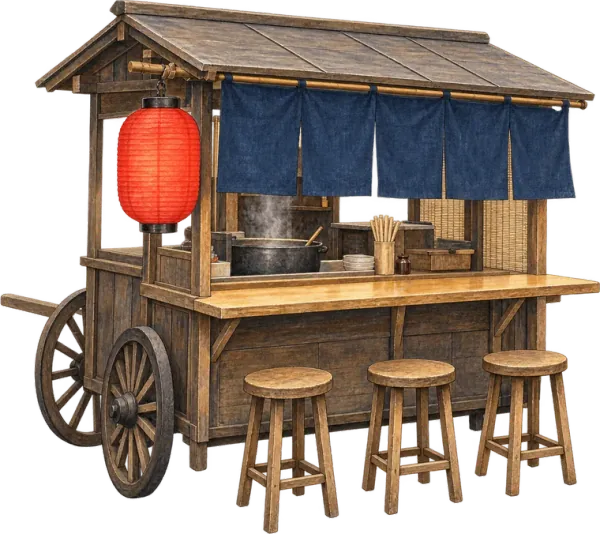
    YataiAbout a hundred open-air food stalls set up at dusk in Tenjin, Nakasu and Nagahama
    Created by Geolonia (https://geolonia.com/).

    Seasonal calendar

    JANFEBMARAPRMAYJUNJULAUGSEPOCTNOVDEC
    Plum blossom 25 JAN – 10 MAR
    Cherry blossom 24 MAR – 07 APR
    Autumn foliage 08 NOV – 07 DEC

    Notable places

    Notable placeWhy

    太宰府天満宮

    25 JAN – 10 MAR · Nature · Plum blossom

    Plum blossom — Dazaifu Tenmangu 太宰府天満宮

    Fukuoka

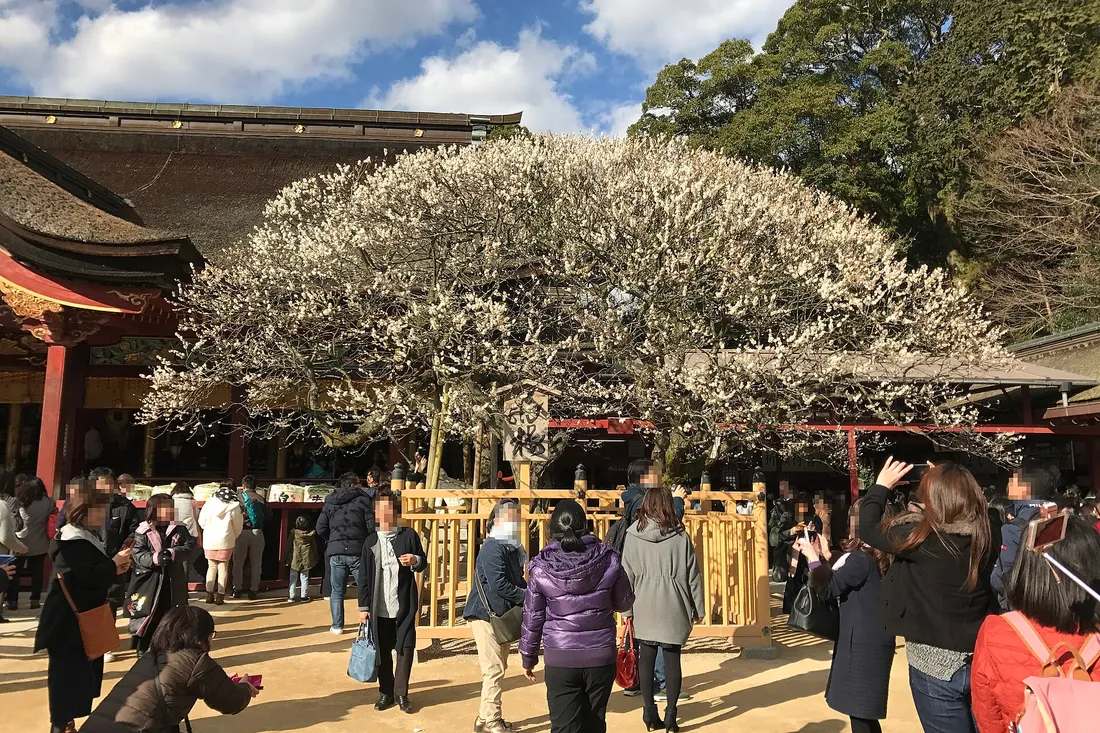
    The white Tobiume in full flower before the main hall of Dazaifu Tenmangu, with a crowd of worshippers
    A pink plum in full flower in front of the main hall of Dazaifu Tenmangu, with the white Tobiume behind it
    Plum trees in flower along a path in the grounds of Dazaifu Tenmangu

    The shrine built over the grave of Sugawara no Michizane, the exiled scholar worshipped as Tenjin, whose flower is the plum: about 6,000 trees of 200 varieties flower in the grounds from late January to early March. The first to open is the Tobiume to the right of the main hall, the tree said to have flown from Kyoto in one night to follow him. The main hall reopened for worship in September 2026 after a restoration of three and a half years, its first in 124 years, and 2027 brings the grand festival held once in 25 years, 1,125 years after his death; its dates are not published yet.

    Dates
    25 JAN – 10 MAR
    Where
    FukuokaGoogle Maps
    Survive
    Heavy. January and February are exam season, and Tenjin is the god of learning: at weekends the approach is packed from the station to the hall. Come at gate opening, 6:30 in winter, and see the plums before the crowd arrives.
    Holidays
    National Foundation Day, Emperor's Birthday · long weekend: expect full trains and hotels
    Access
    Nishitetsu from Fukuoka (Tenjin) with a change at Futsukaichi, about 35 min, then 5 min on foot from Dazaifu Stn. The direct bus Tabito takes about 45 min from Hakata Bus Terminal and about 25 min from the international terminal of Fukuoka Airport.
    Heritage
    Important Cultural Property · main hall, 1907 太宰府天満宮本殿 重要文化財
    Source
    Official site · checked 2026-09-20
    Photos
    3 photos · credits
    1. そらみみ · CC BY-SA 4.0
    2. 酒呑みおやぢ · CC BY-SA 3.0
    3. そらみみ · CC BY-SA 4.0

    1–2 h · Open in Google Maps

    The shrine built over the grave of Sugawara no Michizane, the exiled scholar worshipped as Tenjin, whose flower is the plum: about 6,000 trees of 200 varieties flower in the grounds from late January to early March. The first to open is the Tobiume to the right of the main hall, the tree said to have flown from Kyoto in one night to follow him. The main hall reopened for worship in September 2026 after a restoration of three and a half years, its first in 124 years, and 2027 brings the grand festival held once in 25 years, 1,125 years after his death; its dates are not published yet.

    Important Cultural Property · main hall, 1907

    The white Tobiume in full flower before the main hall of Dazaifu Tenmangu, with a crowd of worshippers

    Photo · そらみみ · CC BY-SA 4.0

    秋月

    27 MAR – 07 APR · Nature · Cherry blossom

    Cherry blossom — Akizuki castle town 秋月

    Fukuoka

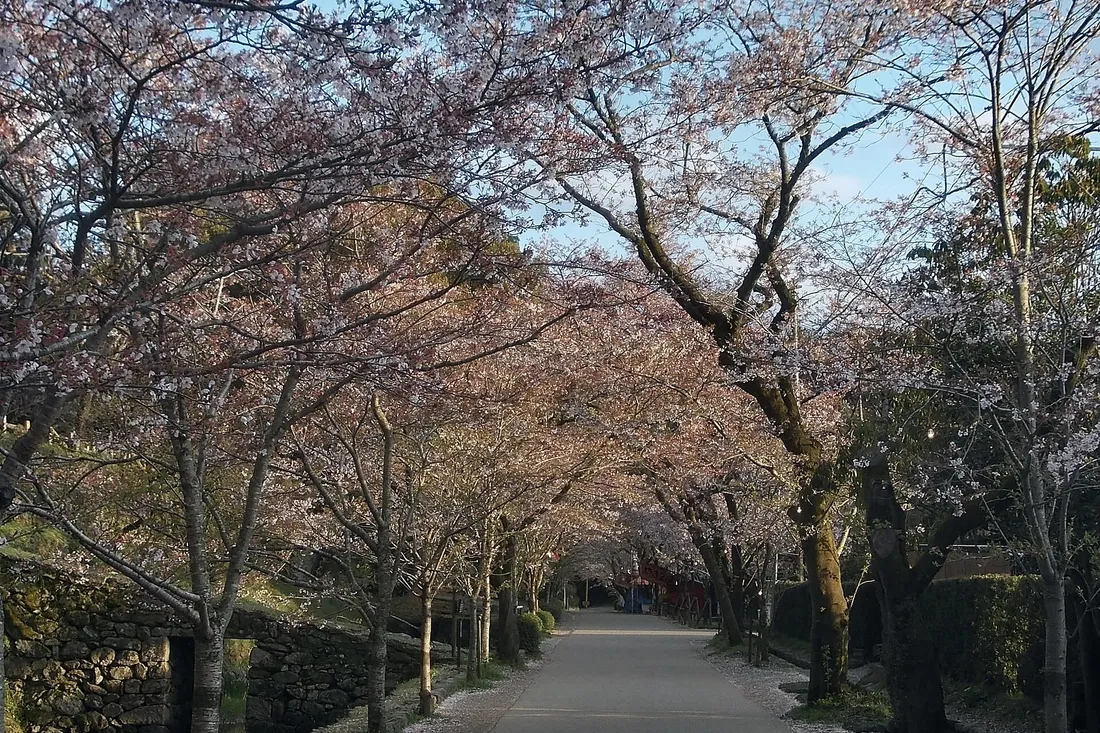
    The cherry avenue of Sugi-no-baba in Akizuki closing over the road in early April
    Cherry trees meeting over Sugi-no-baba street in Akizuki, with a car passing under them
    Maples in autumn colour over the Notori river in Akizuki, beside an old house
    The Nagayamon gate of Akizuki Castle on its stone steps in late November

    A small castle town in a side valley of Asakura, once the seat of a branch of the Kuroda. Sugi-no-baba, the 500-metre avenue to the castle, was a cedar-lined riding ground until it was replanted with cherries to mark the victory over Russia: about 200 Somei Yoshino now close over it as a tunnel. In late November about 20 maples redden around Kuromon, the black gate that was the main entrance of the castle.

    Dates
    27 MAR – 07 APR
    Where
    FukuokaGoogle Maps
    Survive
    Heavy. The avenue is not closed to traffic, so watch for cars under the trees, and on blossom weekends the road in jams: come early or by bus. The spring festival is usually on the first Sunday of April. Nothing is lit in autumn, so come in daylight. Akizuki car park, ¥400.
    Access
    From JR Kiyama on the Kagoshima Main Line, the Amagi Railway to its terminus, Amagi, then the Amagi Kanko bus, Akizuki line, about 20 min. By car about 20 min from Amagi IC on the Oita Expressway.
    Heritage
    Preservation District for Groups of Traditional Buildings · 1998 朝倉市秋月 重要伝統的建造物群保存地区
    Source
    Official siteCherry blossom page · checked 2026-09-20
    Photos
    4 photos · credits
    1. STA3816 · CC BY-SA 3.0
    2. STA3816 · CC BY-SA 3.0
    3. STA3816 · CC BY-SA 3.0
    4. STA3816 · CC BY-SA 3.0

    20 NOV – 07 DEC · Nature · Autumn foliage

    Autumn foliage — Akizuki castle town 秋月

    Fukuoka

    Maples in autumn colour over the Notori river in Akizuki, beside an old house
    The Nagayamon gate of Akizuki Castle on its stone steps in late November
    The cherry avenue of Sugi-no-baba in Akizuki closing over the road in early April
    Cherry trees meeting over Sugi-no-baba street in Akizuki, with a car passing under them

    A small castle town in a side valley of Asakura, once the seat of a branch of the Kuroda. Sugi-no-baba, the 500-metre avenue to the castle, was a cedar-lined riding ground until it was replanted with cherries to mark the victory over Russia: about 200 Somei Yoshino now close over it as a tunnel. In late November about 20 maples redden around Kuromon, the black gate that was the main entrance of the castle.

    Dates
    20 NOV – 07 DEC
    Where
    FukuokaGoogle Maps
    Survive
    The avenue is not closed to traffic, so watch for cars under the trees, and on blossom weekends the road in jams: come early or by bus. The spring festival is usually on the first Sunday of April. Nothing is lit in autumn, so come in daylight. Akizuki car park, ¥400.
    Holidays
    Labour Thanksgiving Day · long weekend: expect full trains and hotels
    Access
    From JR Kiyama on the Kagoshima Main Line, the Amagi Railway to its terminus, Amagi, then the Amagi Kanko bus, Akizuki line, about 20 min. By car about 20 min from Amagi IC on the Oita Expressway.
    Heritage
    Preservation District for Groups of Traditional Buildings · 1998 朝倉市秋月 重要伝統的建造物群保存地区
    Source
    Official siteAutumn foliage page · checked 2026-09-20
    Photos
    4 photos · credits
    1. STA3816 · CC BY-SA 3.0
    2. STA3816 · CC BY-SA 3.0
    3. STA3816 · CC BY-SA 3.0
    4. STA3816 · CC BY-SA 3.0

    2–3 h · Open in Google Maps

    A small castle town in a side valley of Asakura, once the seat of a branch of the Kuroda. Sugi-no-baba, the 500-metre avenue to the castle, was a cedar-lined riding ground until it was replanted with cherries to mark the victory over Russia: about 200 Somei Yoshino now close over it as a tunnel. In late November about 20 maples redden around Kuromon, the black gate that was the main entrance of the castle.

    Preservation District for Groups of Traditional Buildings · 1998

    The cherry avenue of Sugi-no-baba in Akizuki closing over the road in early April

    Photo · STA3816 · CC BY-SA 3.0

    舞鶴公園

    24 MAR – 06 APR · Nature · Cherry blossom

    Cherry blossom — Maizuru Park, Fukuoka Castle 舞鶴公園

    Fukuoka

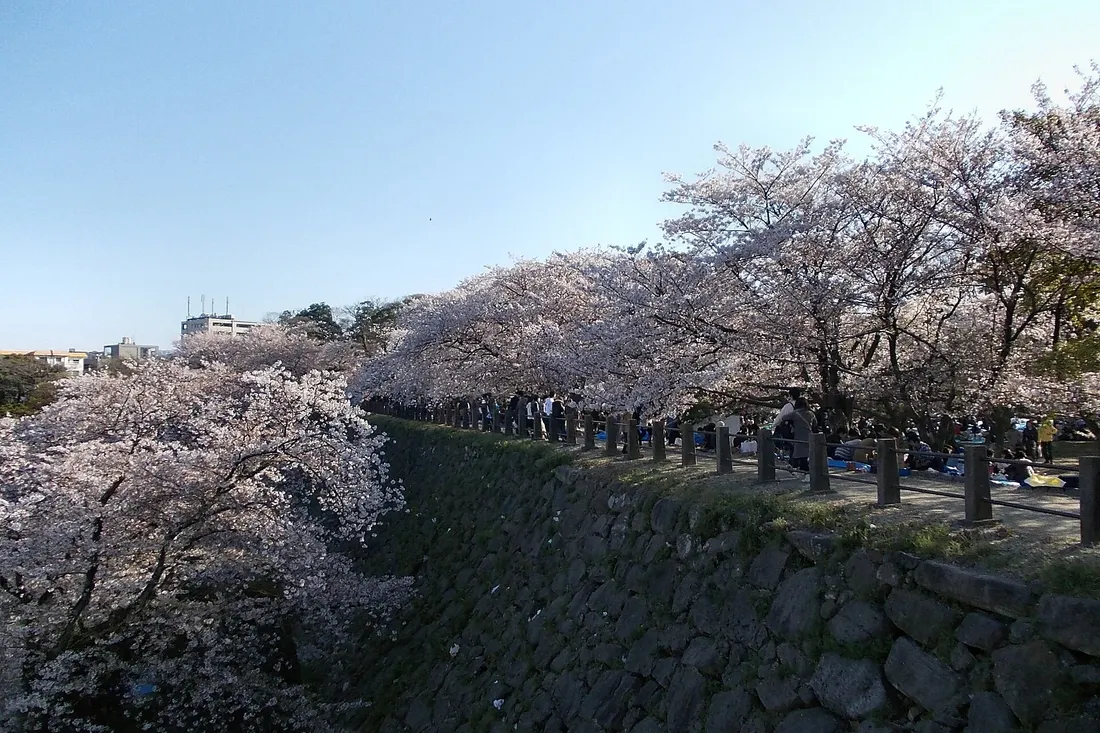
    Cherry trees in full bloom along the stone ramparts of Fukuoka Castle, with picnic sheets laid out under them
    Cherry trees in bloom above the castle moat at dusk
    A large cherry tree in full bloom against a blue sky in Maizuru Park, with people sitting under it

    About 1,000 cherry trees on the stone ramparts of Fukuoka Castle, the seat the Kuroda built from 1601, in the middle of the city. During the Fukuoka Castle Sakura Festival the walls and the trees are lit after dark, historic buildings are opened and food stalls fill the old baileys. Fukuoka is one of the first big cities in Japan to flower: on average the blossom opens on 22 March and is full on the 31st.

    Dates
    24 MAR – 06 APR
    Where
    FukuokaGoogle Maps
    Survive
    Heavy. The park itself is free and always open. In 2026 the festival ran 25 March – 8 April, 11:00–22:00; the three lit enclosures, open 18:00–22:00 with last entry at 21:45, cost ¥600 each or ¥1,500 for all three, free for high school students and younger. Leaving a ground sheet unattended to hold a spot is banned.
    Access
    Subway Kuko Line to Ohorikoen or Akasaka, then under 10 min on foot.
    Source
    Official siteCherry blossom page · checked 2026-09-20
    Photos
    3 photos · credits
    1. STA3816 · CC BY-SA 3.0
    2. STA3816 · CC BY-SA 3.0
    3. STA3816 · CC BY-SA 3.0

    1–2 h · Open in Google Maps

    About 1,000 cherry trees on the stone ramparts of Fukuoka Castle, the seat the Kuroda built from 1601, in the middle of the city. During the Fukuoka Castle Sakura Festival the walls and the trees are lit after dark, historic buildings are opened and food stalls fill the old baileys. Fukuoka is one of the first big cities in Japan to flower: on average the blossom opens on 22 March and is full on the 31st.

    Historic Site · Fukuoka Castle ruins, 1957

    Cherry trees in full bloom along the stone ramparts of Fukuoka Castle, with picnic sheets laid out under them

    Photo · STA3816 · CC BY-SA 3.0

    のこのしまアイランドパーク

    05 OCT – 08 NOV · Nature · Cosmos

    Cosmos — Nokonoshima Island Park のこのしまアイランドパーク

    Fukuoka

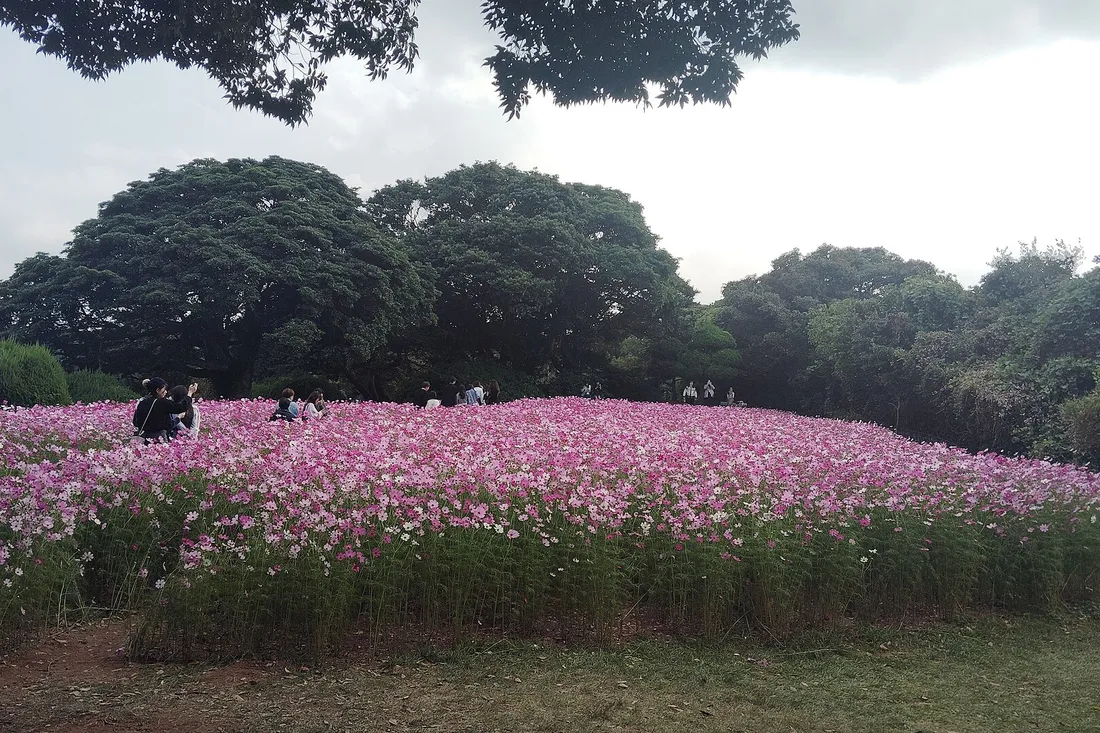
    A field of late-blooming pink cosmos at Nokonoshima Island Park in early November

    A flower park at the northern end of a small island in Hakata Bay, ten minutes by ferry from the city. In autumn a whole slope of cosmos runs down towards the sea: about 200,000 early plants flower from early to late October, and about 300,000 later ones take over from late October into early November, so the hill stays in flower for about five weeks.

    Dates
    05 OCT – 08 NOV
    Where
    FukuokaGoogle Maps
    Survive
    On fine October weekends expect queues for the ferry and for the island bus: go on a weekday or take a morning boat.
    Holidays
    Sports Day, Culture Day · long weekend: expect full trains and hotels
    Access
    Nishitetsu bus to Noko Tosenba, the ferry pier at Meinohama; ferry to Nokonoshima, about 10 min; then the island bus to Island Park, about 13 min.
    Source
    Official siteCosmos page · checked 2026-09-20
    Photos
    Photo credit
    1. 水だらけのプール · CC0

    3 h · Open in Google Maps

    A flower park at the northern end of a small island in Hakata Bay, ten minutes by ferry from the city. In autumn a whole slope of cosmos runs down towards the sea: about 200,000 early plants flower from early to late October, and about 300,000 later ones take over from late October into early November, so the hill stays in flower for about five weeks. A field of late-blooming pink cosmos at Nokonoshima Island Park in early November

    Photo · 水だらけのプール · CC0

    雷山千如寺大悲王院

    08–25 NOV · Nature · Autumn foliage

    Autumn foliage — Raizan Sennyo-ji 雷山千如寺大悲王院

    Fukuoka

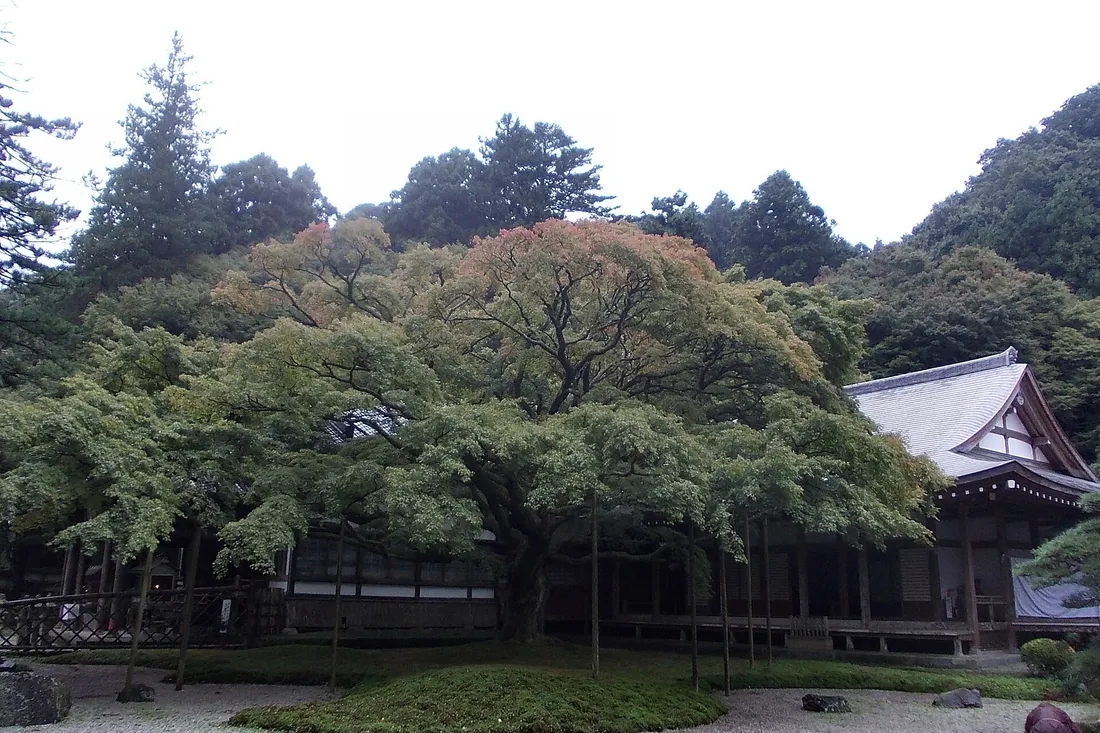
    The great maple of Sennyo-ji spreading in front of the temple hall in late October, its crown just beginning to turn

    A mountain temple on the slope of Mount Raizan above Itoshima, said to have been founded by a monk from India, which keeps a standing Thousand-Armed Kannon that is an Important Cultural Property. In its courtyard stands one maple more than 400 years old, about eight metres tall, a natural monument of the prefecture, which turns a single deep red in mid-November. People come for this one tree.

    Dates
    08–25 NOV
    Where
    FukuokaGoogle Maps
    Survive
    Heavy. In November a ¥200 mountain fee for the grounds and the maple is added to the ¥500 admission. On peak weekends the mountain road backs up below the temple: take the weekday bus or arrive at opening.
    Holidays
    Labour Thanksgiving Day · long weekend: expect full trains and hotels
    Access
    Community bus from JR Chikuzen-Maebaru to Raizan Kannon-mae, then about 7 min on foot. In the 2025 season a direct extra bus ran from the south exit on weekdays, 17–28 November, three departures, ¥500 one way. By car about 15 min from Maebaru IC.
    Source
    Official siteAutumn foliage page · checked 2026-09-20
    Photos
    Photo credit
    1. STA3816 · CC BY-SA 4.0

    1 h · Open in Google Maps

    A mountain temple on the slope of Mount Raizan above Itoshima, said to have been founded by a monk from India, which keeps a standing Thousand-Armed Kannon that is an Important Cultural Property. In its courtyard stands one maple more than 400 years old, about eight metres tall, a natural monument of the prefecture, which turns a single deep red in mid-November. People come for this one tree. The great maple of Sennyo-ji spreading in front of the temple hall in late October, its crown just beginning to turn

    Photo · STA3816 · CC BY-SA 4.0

    All places in Fukuoka

    Events

    EventWhat it is

    みあれ祭

    In 7 days · 1–3 Oct

    Matsuri

    1–3 Oct · Matsuri

    Munakata Taisha Miare-sai みあれ祭

    Oshima island to Konominato port, then Munakata Taisha, Fukuoka

    Fishing boats flying their big-catch flags in the sea procession of the Miare-sai, 1 October 2014
    The main hall and worship hall of Hetsu-miya, the mainland sanctuary of Munakata Taisha
    Takamiya, the open-air altar in the woods behind Hetsu-miya, where the festival closes

    The autumn festival of Munakata Taisha, the World Heritage shrine of three sanctuaries, opens at sea. The deities of the two island sanctuaries are brought from Oshima to the mainland escorted by more than a hundred fishing boats flying their big-catch flags. The fleet leaves Oshima at 9:30 and reaches Konominato at 10:40; a land procession carries on to the main sanctuary, Hetsu-miya, which it enters just after noon. Horseback archery follows on the morning of the 2nd, and the festival closes at 18:00 on the 3rd with sacred dance at Takamiya, the open-air altar in the woods.

    Dates
    1–3 Oct
    Where
    Oshima island to Konominato port, then Munakata Taisha, FukuokaGoogle Maps
    Open
    Thu 1 Oct · Sea procession: leaves Oshima 9:30, reaches Konominato 10:40 · land procession from 11:10, enters Hetsu-miya at 12:10Fri 2 Oct · Yabusame horseback archery at 8:00 · main rite at 11:00, followed by the Okina danceSat 3 Oct · Takamiya autumn rite 10:00 · shrine rite with Urayasu dance 11:00 · tea offering 14:00 · Takamiya Kannabi-sai with sacred dance 18:00
    Tickets
    Free. Watch from the quay at Konominato, where the fleet passes 100–150 metres offshore; three car parks by the ferry terminal, ¥200–300. Nishitetsu bus 1 or 1-2 from JR Togo Stn: about 10 min to Munakata Taisha-mae, then on to Konominato Hatoba; roughly one bus an hour.
    Heritage
    World Heritage · Munakata and Okinoshima, 2017 「神宿る島」宗像・沖ノ島と関連遺産群 世界遺産
    Source
    Official site · checked 2026-09-20
    Photos
    3 photos · credits
    1. Amaknowjp · CC BY-SA 4.0
    2. そらみみ (Soramimi) · CC BY-SA 4.0
    3. そらみみ (Soramimi) · CC BY-SA 4.0
    More than a hundred fishing boats escort the island deities to the mainland Fishing boats flying their big-catch flags in the sea procession of the Miare-sai, 1 October 2014

    Photo · Amaknowjp · CC BY-SA 4.0

    博多旧市街ライトアップウォーク 千年煌夜

    In 37 days · 31 Oct – 3 Nov

    Light-up

    31 Oct – 3 Nov · Light-up

    Hakata Old Town Light Up Walk 博多旧市街ライトアップウォーク 千年煌夜

    Temples and shrines of Hakata old town, Fukuoka

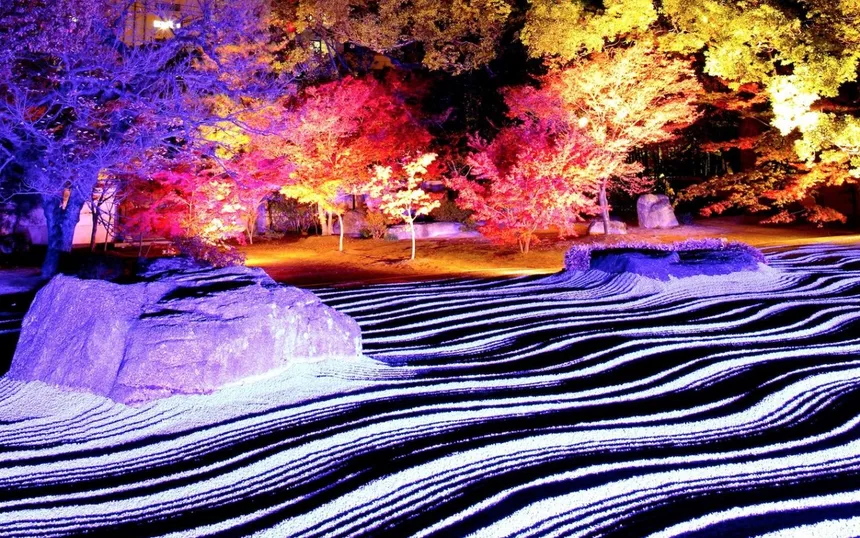
    The rock garden of Joten-ji lit in colour at night during the Hakata light-up walk, November 2012
    The vermilion five-storey pagoda of Tocho-ji, one of the temples on the route, by day
    Hakata Sennen-no-Mon, the wooden gate at the entrance to the old temple quarter

    For four evenings the temples of Hakata’s old town, the merchant quarter that was Japan’s door to the continent, are lit and opened after dark: 14 paid sites in two areas, Tocho-ji and Joten-ji among them, with free ones around them, Kushida Shrine included. The theme for 2026 is Stars. One ticket covers every paid site.

    Dates
    31 Oct – 3 Nov
    Where
    Temples and shrines of Hakata old town, FukuokaGoogle Maps
    Open
    Open every day · Gokusho and Reisen area 17:30–21:00, last entry 20:45 · Gofukumachi area 17:30–21:30, last entry 21:15
    Tickets
    ¥2,450 digital or ¥2,500 on paper for all paid sites; junior high age and under free with an adult; students ¥1,750 at the booths with ID. An express pass is ¥6,000. On sale since 31 JulBuy tickets
    Holidays
    Culture Day · long weekend: expect full trains and hotels
    Source
    Official site · checked 2026-09-20
    Photos
    3 photos · credits
    1. Hiroshi Kageyama · CC BY 3.0
    2. Nick-D · CC BY-SA 4.0
    3. 水車 · CC BY-SA 4.0
    Four evenings when the temples of old Hakata are lit and opened on one ticket The rock garden of Joten-ji lit in colour at night during the Hakata light-up walk, November 2012

    Photo · Hiroshi Kageyama · CC BY 3.0

    特別展 卑弥呼の鏡 ―三角縁神獣鏡がヤマト王権をつくった―

    In 37 days · 31 Oct – 11 Jan

    Exhibition

    31 Oct – 11 Jan · Exhibition

    Himiko’s Mirrors 特別展 卑弥呼の鏡 ―三角縁神獣鏡がヤマト王権をつくった―

    Kyushu National Museum, Dazaifu, Fukuoka

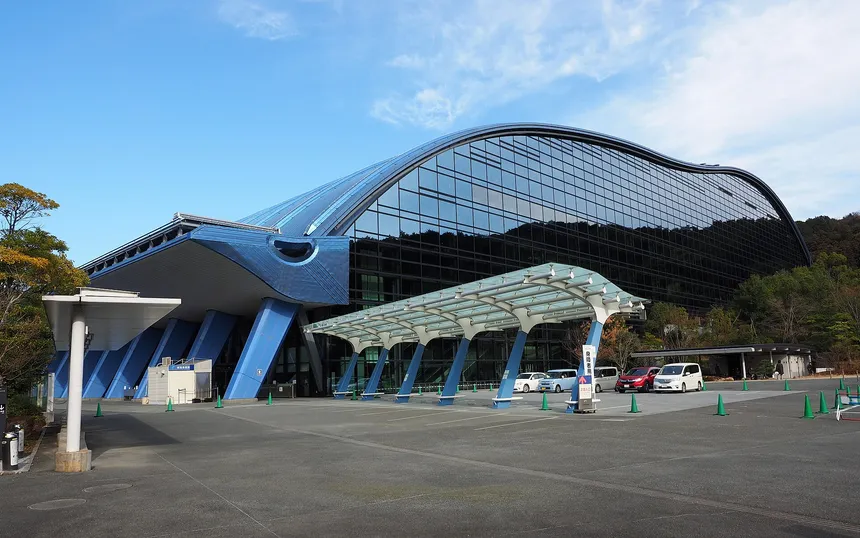
    The curved glass-and-steel building of the Kyushu National Museum in Dazaifu
    A triangular-rimmed bronze mirror with gods and beasts, from the Kanbara Jinja burial mound in Shimane: the type of mirror the exhibition is about

    The Chinese chronicle of Wei records that in 239 its emperor sent Himiko, queen of Wa, a hundred bronze mirrors. The candidates are the triangular-rimmed mirrors with gods and beasts found in early burial mounds across Japan. The exhibition gathers them, several of them Important Cultural Properties, with a National Treasure mirror, haniwa and arms, to argue, as its subtitle says, that these mirrors made the Yamato kingship. The museum stands beside Dazaifu Tenmangu.

    Dates
    31 Oct – 11 Jan
    Where
    Kyushu National Museum, Dazaifu, FukuokaGoogle Maps
    Open
    Tue–Fri and Sun 9:30–17:00 · Sat 9:30–19:00 · last entry 30 min before closing · Closed 2 Nov, 9 Nov, 16 Nov, 24 Nov, 30 Nov, 7 Dec, 14 Dec, 21 Dec, 24–31 Dec and 4 Jan
    Tickets
    ¥2,000, university students ¥1,200, high school age and under free. Sold only at the museum during the show: there are no advance tickets.
    Holidays
    Culture Day, Labour Thanksgiving Day, New Year's Day, Coming of Age Day · long weekend: expect full trains and hotels
    Source
    Official site · checked 2026-09-20
    Photos
    2 photos · credits
    1. Nick-D · CC BY-SA 4.0
    2. Saigen Jiro · Public domain
    The bronze mirrors tied to Queen Himiko and the making of the Yamato state The curved glass-and-steel building of the Kyushu National Museum in Dazaifu

    Photo · Nick-D · CC BY-SA 4.0

    糸島 牡蠣小屋

    In 38 days · 1 Nov – 31 Mar

    Food season

    1 Nov – 31 Mar · Food season

    Itoshima oyster huts 糸島 牡蠣小屋

    Fishing harbours of Itoshima: Kishi, Funakoshi, Kafuri, Fukuyoshi, Fukae, Fukuoka

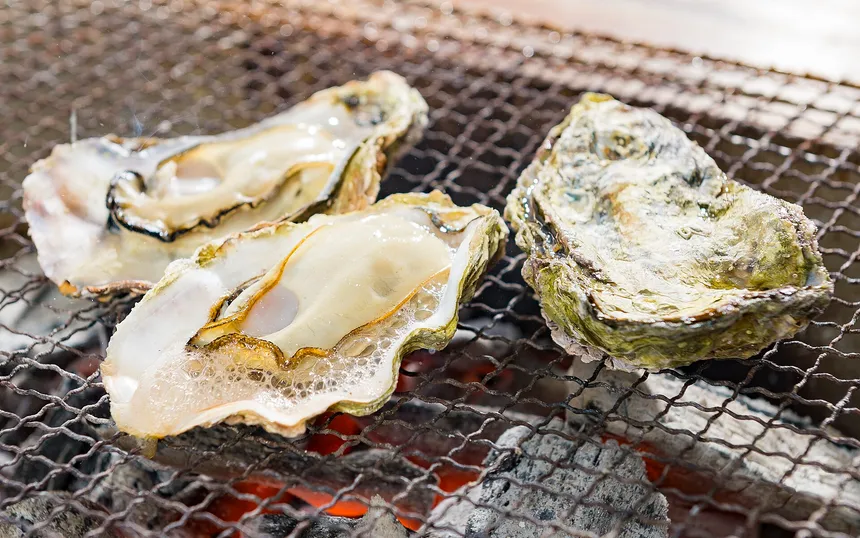
    Oysters opening on the grill at an oyster hut; this photograph was taken in Hiroshima Prefecture, not in Itoshima
    The fishing harbour of Kishi in Itoshima, where eleven oyster huts open in winter; the boat is the ferry to Himeshima

    From autumn to spring the oyster farmers of Itoshima, west of Fukuoka, open huts on their own quays: you buy oysters by the kilo and grill them yourself at the table. About two dozen huts work five harbours, eleven of them side by side at Kishi. The season runs from October to about April, but each hut opens and closes on its own day; the dates here are the months when all of them are open, and the list for 2026–27 is not published yet.

    Dates
    1 Nov – 31 Mar
    Where
    Fishing harbours of Itoshima: Kishi, Funakoshi, Kafuri, Fukuyoshi, Fukae, FukuokaGoogle Maps
    Tickets
    No tickets. Buses from the north exit of JR Chikuzen-Maebaru serve most of the harbours. Check that the hut you want is open on the tourism association’s list before you go.
    Holidays
    Culture Day, Labour Thanksgiving Day, New Year's Day, Coming of Age Day, National Foundation Day, Emperor's Birthday, Vernal Equinox Day, Substitute holiday · long weekend: expect full trains and hotels
    Source
    Official site · checked 2026-09-20
    Photos
    2 photos · credits
    1. 東広島市 · CC BY-SA 4.0
    2. Chihaya Sta · CC BY 4.0
    Winter on the Itoshima coast: oysters grilled at your own table in the fishermen’s huts Oysters opening on the grill at an oyster hut; this photograph was taken in Hiroshima Prefecture, not in Itoshima

    Photo · 東広島市 · CC BY-SA 4.0

    大相撲十一月場所

    In 45 days · 8–22 Nov

    Sport

    8–22 Nov · Sport

    Grand Sumo — November Tournament 大相撲十一月場所

    Fukuoka Kokusai Center, Fukuoka

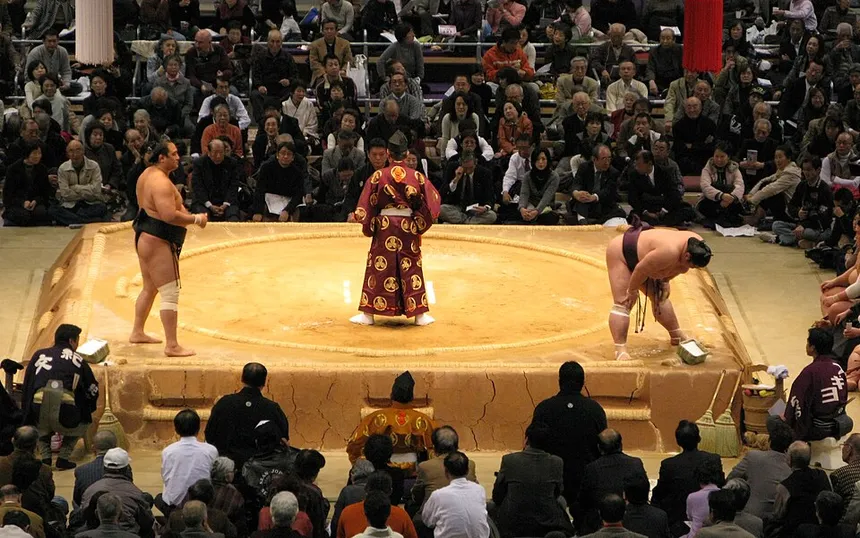
    A bout at the Kyushu tournament in Fukuoka
    Fukuoka Kokusai Center dressed for the November tournament
    Inside the arena at the Kyushu tournament

    The year's last tournament, in Fukuoka: a smaller arena, closer seats, easier tickets than Tokyo, and a loud local crowd. Hakata's yatai food stalls are ten minutes' walk from the hall.

    Dates
    8–22 Nov
    Where
    Fukuoka Kokusai Center, FukuokaGoogle Maps
    Open
    Open every day · Doors 8:45 (10:30 on 20–21 Nov, 10:00 on the 22nd) · top divisions from about 14:00 · ends about 18:00
    Tickets
    Easier than Tokyo; weekday tickets are usually available a week out. On sale since 19 SepBuy ticketsKlook
    Source
    Official site · checked 2026-09-12
    Photos
    3 photos · credits
    1. t-konno · CC BY-SA 3.0
    2. Tzuhsun Hsu · CC BY-SA 2.0
    3. Simon Desmarais · CC BY-SA 2.0
    The year’s last sumo tournament, in a smaller Fukuoka arena with closer seats A bout at the Kyushu tournament in Fukuoka

    Photo · t-konno · CC BY-SA 3.0

    北九州ポップカルチャーフェスティバル2026

    In 65 days · 28–29 Nov

    Show

    28–29 Nov · Show

    KPF 2026 — Kitakyushu Pop Culture Festival 北九州ポップカルチャーフェスティバル2026

    Kitakyushu Messe and Aruaru City, Kokura, Fukuoka

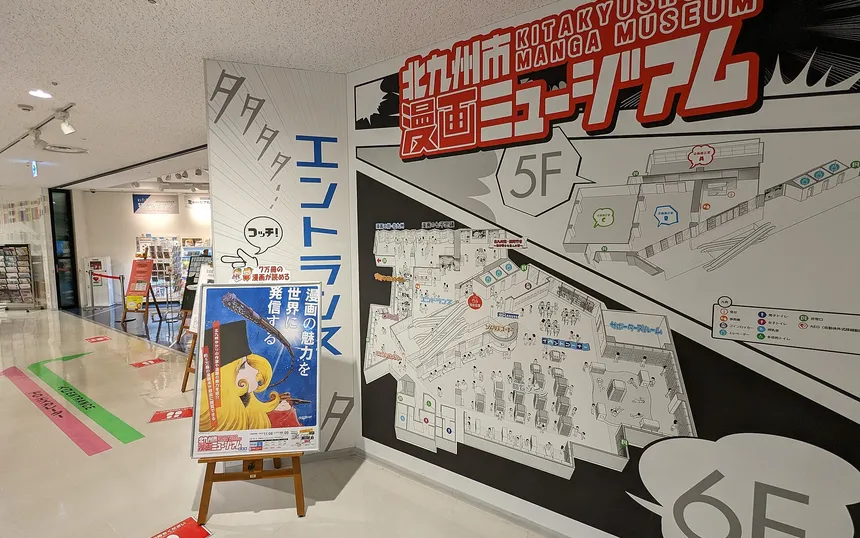
    The entrance of the Kitakyushu Manga Museum inside Aruaru City, one of the festival’s two venues
    Shelves of manga in the time-tunnel corridor of the Kitakyushu Manga Museum

    A free weekend of anime, manga and games: voice-actor stages, exhibitions, cosplay and merchandise in the Kitakyushu Messe hall and in Aruaru City, the building of anime shops that also houses the Kitakyushu Manga Museum. Both are a short walk from the Shinkansen side of Kokura Station. This is the fourth edition; the 2025 one drew 47,854 visitors to the hall.

    Dates
    28–29 Nov
    Where
    Kitakyushu Messe and Aruaru City, Kokura, FukuokaGoogle Maps
    Tickets
    Free entry.
    Source
    Official site · checked 2026-09-20
    Photos
    2 photos · credits
    1. Bmazerolles · CC BY 4.0
    2. Asai1920 · CC BY-SA 3.0
    A free anime and manga weekend beside Kokura Station The entrance of the Kitakyushu Manga Museum inside Aruaru City, one of the festival’s two venues

    Photo · Bmazerolles · CC BY 4.0

    鬼夜

    In 105 days · 7 Jan

    Matsuri

    7 Jan · Matsuri

    Oniyo fire festival 鬼夜

    Daizenji Tamataregu, Kurume, Fukuoka

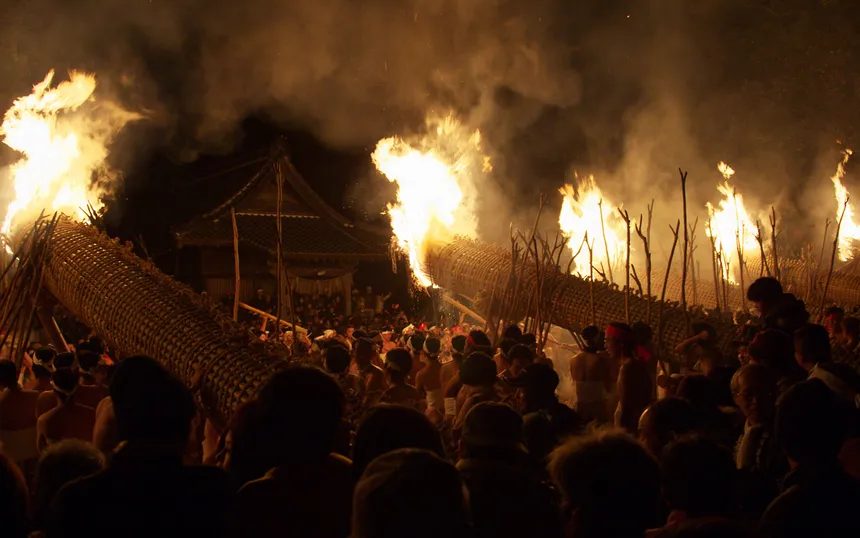
    The great torches burning above the crowd at the Oniyo fire festival, 7 January 2009
    One of the great torches of bound bamboo resting under a roof at Daizenji Tamataregu

    A rite of driving out demons held on the night of 7 January for more than 1,600 years, counted among Japan’s three great fire festivals and a national Important Intangible Folk Cultural Property since 1994. Several hundred young men in loincloths raise six torches, each 13 metres long, a metre across at the head and 1.2 tonnes, and carry them burning round the precinct.

    Dates
    7 Jan
    Where
    Daizenji Tamataregu, Kurume, FukuokaGoogle Maps
    Open
    Rites from 13:00 · in 2026 the great torches were lit about 20:40 and the night ended about 23:10 · the 2027 timetable is not published yet
    Tickets
    Free, held rain or shine. Daizenji Stn on the Nishitetsu Tenjin–Omuta Line, 5 min on foot.
    Heritage
    Important Intangible Folk Cultural Property · 1994 大善寺玉垂宮の鬼夜
    Source
    Official site · checked 2026-09-20
    Photos
    2 photos · credits
    1. Pontafon · CC BY-SA 3.0
    2. STA3816 · CC BY-SA 4.0
    Six giant torches carried round a shrine by hundreds of men on a January night The great torches burning above the crowd at the Oniyo fire festival, 7 January 2009

    Photo · Pontafon · CC BY-SA 3.0

    柳川雛祭り さげもんめぐり

    In 140 days · 11 Feb – 3 Apr

    Matsuri

    11 Feb – 3 Apr · Matsuri

    Yanagawa Sagemon Meguri 柳川雛祭り さげもんめぐり

    Canal town of Yanagawa, Fukuoka

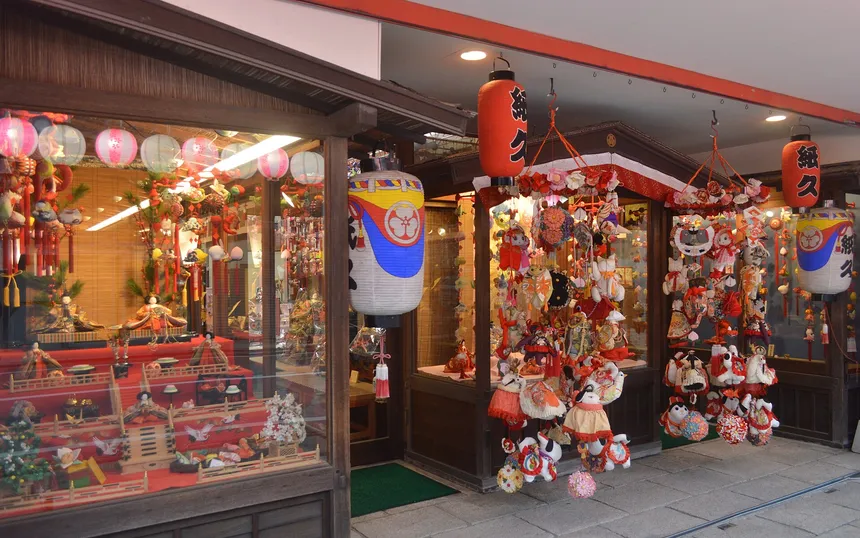
    A doll shop in Yanagawa with tiered hina dolls in the window and sagemon hanging at the door
    Close view of sagemon: bright wound-thread balls hanging on cords
    Cloth figures on a sagemon: a cat, a crane and a baby

    In Yanagawa the hina dolls of the girls’ festival are flanked by sagemon: hanging strings of cloth cranes, rabbits, chicks and crawling babies with bright wound-thread balls, wishes for a daughter’s health and happiness. For 52 days, on the same dates every year, the sights, shopping streets and shops of the canal town show theirs. The day to come for is the water parade in mid-March, when children in festival dress ride the canal boats; in 2026 it was on Sunday 15 March, 11:00–12:20, and the 2027 date is not announced yet.

    Dates
    11 Feb – 3 Apr
    Where
    Canal town of Yanagawa, FukuokaGoogle Maps
    Open
    Thu 11 Feb · Opening rite and procession; in 2026 from 10:00Sat 3 Apr · Nagashi-bina, the closing rite
    Tickets
    Free to walk. The 2027 programme is not published yet.
    Holidays
    National Foundation Day, Emperor's Birthday, Vernal Equinox Day, Substitute holiday · long weekend: expect full trains and hotels
    Source
    Official site · checked 2026-09-20
    Photos
    3 photos · credits
    1. Asturio Cantabrio · CC BY-SA 4.0
    2. Asturio Cantabrio · CC BY-SA 4.0
    3. Asturio Cantabrio · CC BY-SA 4.0
    The canal town hangs out its girls’ festival ornaments for 52 days A doll shop in Yanagawa with tiered hina dolls in the window and sagemon hanging at the door

    Photo · Asturio Cantabrio · CC BY-SA 4.0

    博多祇園山笠

    In 280 days · 1–15 Jul

    Matsuri

    1–15 Jul · Matsuri

    Hakata Gion Yamakasa 博多祇園山笠

    Kushida Shrine and the streets of Hakata, Fukuoka

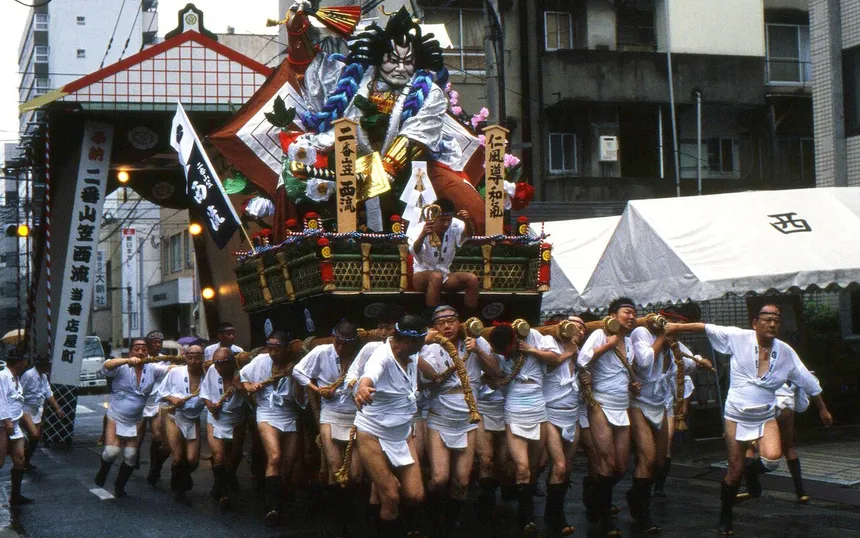
    A team in white coats and loincloths running with its one-tonne float through a Hakata street, 13 July 2010
    A racing float with riders aboard pushing through the crowd, July 2006
    A decorated float on display in the Shintencho arcade, layered with warrior figures and castles

    Hakata’s festival of 1–15 July, traced to 1241, when the Zen priest Shoichi Kokushi was carried through the town sprinkling holy water against a plague; it is on UNESCO’s list of intangible heritage. For two weeks decorated floats 10 to 15 metres tall stand on view around the city. The racing floats come out on the 10th, and at 4:59 on the 15th the first of seven district teams, men in loincloths and short coats, charges its one-tonne float into Kushida Shrine and out along a five-kilometre course, the others following minutes apart against the clock. In 2027 the 15th is a Thursday.

    Dates
    1–15 Jul
    Where
    Kushida Shrine and the streets of Hakata, FukuokaGoogle Maps
    Open
    Thu 1 Jul · Decorated floats go on view across the city, until the 14thFri 9 Jul · Oshioi-tori: all seven teams run to the beach at Hakozaki for purifying sandSat 10 Jul · Nagare-gaki: the racing floats come out, each in its own districtSun 11 Jul · Asa-yama in the early morning, then runs into the neighbouring districtsMon 12 Jul · Oiyama-narashi, the timed rehearsal, from 15:59Tue 13 Jul · Shudan-yamamise: the floats parade on Meiji-dori from 15:30Wed 14 Jul · Nagare-gaki, the last district runsThu 15 Jul · Oiyama: the first float enters Kushida Shrine at 4:59
    Tickets
    Free from the street: come well before dawn for the race. Seats in the stand inside Kushida Shrine are sold in person at the shrine on 26 June; in 2026 about 280 seats at ¥7,000 went in 15 minutes.
    Heritage
    UNESCO Intangible Cultural Heritage · 2016 山・鉾・屋台行事(ユネスコ無形文化遺産代表一覧表)Important Intangible Folk Cultural Property · 1979 博多祇園山笠行事
    Source
    Official site · checked 2026-09-20
    Photos
    3 photos · credits
    1. ぱちょぴ(pacyopi) · CC BY-SA 3.0
    2. Pontafon · CC BY-SA 3.0
    3. そらみみ · CC BY-SA 4.0
    Seven teams race one-tonne floats through Hakata at 4:59 in the morning A team in white coats and loincloths running with its one-tonne float through a Hakata street, 13 July 2010

    Photo · ぱちょぴ(pacyopi) · CC BY-SA 3.0

    All events in Fukuoka

    Meibutsu & craft

    • Meibutsu & craft · Fukuoka

      Hakata weaving 博多織

      はかたおり

      Stiff, dense silk with raised stripes, woven above all for obi, the sash worn over a kimono. Once tied it does not slip, which is why samurai tucked their swords into it; the technique came from Song China with a Hakata merchant in 1241.

    • Meibutsu & craft · Fukuoka

      Hakata dolls 博多人形

      はかたにんぎょう

      Unglazed clay figures painted by hand in soft, matt colours: beautiful women, children, samurai and characters from Noh and kabuki. The tradition goes back to the craftsmen gathered to build Fukuoka Castle from 1600, a roof-tile maker among them.

    • Meibutsu & craft · Fukuoka

      Kurume kasuri 久留米絣

      くるめがすり

      Indigo cotton woven from threads tied and dyed before weaving, so the white pattern has soft, blurred edges; once everyday workwear, now also clothes, bags and cushions. The technique was worked out around 1800 by Inoue Den, a twelve-year-old girl in Kurume.

    • Meibutsu & craft · Fukuoka

      Koishiwara ware 小石原焼

      こいしわらやき

      Sturdy everyday pottery from a mountain village: plates, bowls and cups marked with rows of small chatter cuts made in the slip as the wheel turns, or with brushed and poured slip. In 1975 it became the first pottery named a national traditional craft.

    Food

    • Food · Fukuoka

      Hakata ramen 博多ラーメン

      はかたラーメン

      Thin, straight noodles in a milky pork-bone broth, ordered by how firm you want them, from soft to barely cooked. When the noodles run out you order a second helping, kaedama, into the same bowl.

    • Food · Fukuoka

      Spicy pollock roe 辛子明太子

      からしめんたいこ

      Whole sacs of pollock roe cured in salt and chilli, pink and fine-grained, eaten cold on rice, lightly grilled, or stirred into butter for pasta. A favourite gift to bring home from Fukuoka.

    • Food · Fukuoka

      Mizutaki 水炊き

      みずたき

      Chicken simmered on the bone into a cloudy white broth, then cooked at the table with cabbage, leek and tofu. The broth is drunk first, from a cup, and the meal ends with rice or noodles cooked in what is left.

    • Food · Fukuoka

      Yame tea 八女茶

      やめちゃ

      Green tea from the hills of Yame, above all gyokuro: leaves shaded for weeks before picking, which makes the tea sweet and savoury rather than bitter. Yame is the country’s largest source of traditional gyokuro, shaded under straw and picked by hand.

    • Food · Fukuoka

      Itoshima oysters 糸島カキ

      いとしまかき

      Oysters grilled in the shell over charcoal at your own table, in fishermen’s huts, kaki-goya, set up on the harbours west of the city. The huts open only for the winter season.

    History through time

    57
    The Han emperor sends a gold seal to the king of Na; it was dug up on Shikanoshima in 1784 and is kept in the Fukuoka City Museum.

    7th century
    Dazaifu is set up as the government of Kyushu and the state’s office for foreign envoys, behind a 1.2-kilometre earthwork built after the defeat in Korea in 663.

    901
    The scholar-minister Sugawara no Michizane is exiled to Dazaifu and dies there two years later; the shrine built over his grave is, with Kitano in Kyoto, one of the two head shrines of the Tenjin cult.

    1274 and 1281
    Mongol fleets land in Hakata Bay; stretches of the 20-kilometre stone wall built between the two invasions still stand along the shore.

    1601
    Kuroda Nagamasa builds a castle west of the Naka River and names the town Fukuoka; merchant Hakata stays on the east bank, and the railway station still carries its name.

    1901
    The state-run Yawata Steel Works begins production in what is now Kitakyushu.
    Add to which trip?