The Kigo 季語 Kyoto Prefecture · 京都府

Now

Coming up

Places

PlanPick your weeksFind your reasonsCheck your dates

    Arrow keys to move · Enter to open · Esc to close

    EN 日本語

    Kyoto 京都府

    The old capital and its hinterland: a thousand years of temples, gardens and craft workshops set against hills that turn red in November. Beyond the city, the tea fields of Uji, the thatched villages of Miyama and the Sea of Japan coast at Amanohashidate belong to the same prefecture.
    Yasaka Pagoda
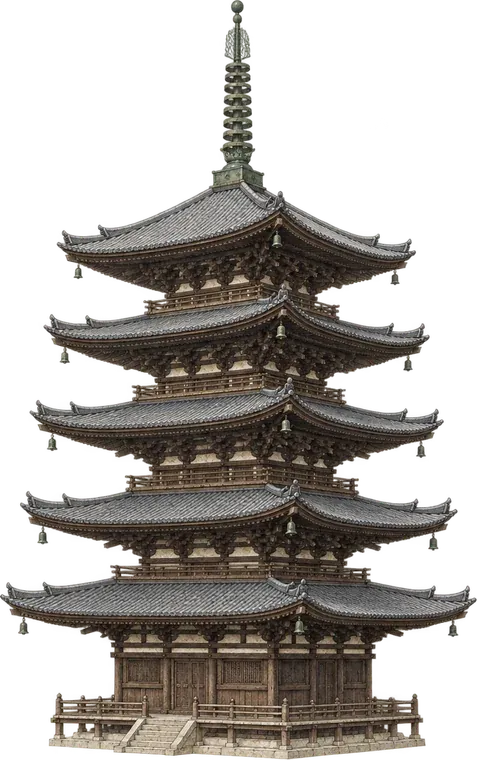
    Yasaka PagodaThe five-storey pagoda above the lanes of Higashiyama
    Created by Geolonia (https://geolonia.com/).

    Seasonal calendar

    JANFEBMARAPRMAYJUNJULAUGSEPOCTNOVDEC
    Autumn foliage 10 NOV – 06 DEC
    Cherry blossom 08–20 APR

    Notable places

    Notable placeWhy

    大覚寺

    25–27 SEP · Nature · Moon-viewing

    Moon-viewing — Daikaku-ji 大覚寺

    Kyoto

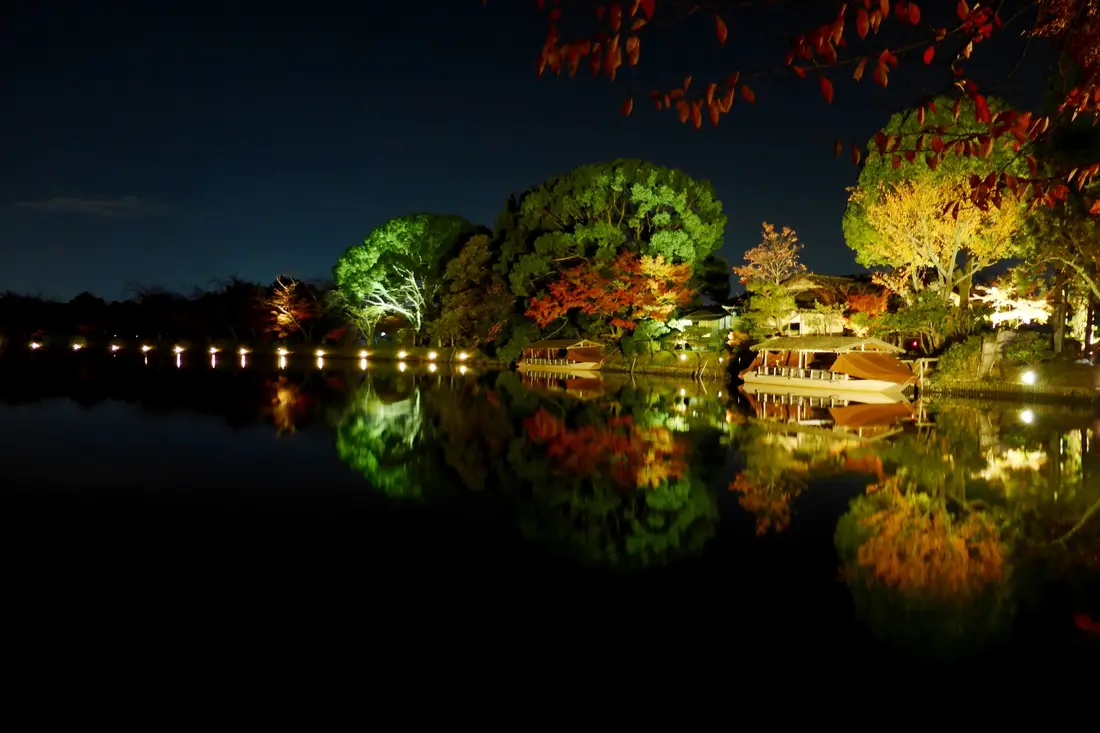
    Osawa Pond at Daikaku-ji on an autumn evening, lit trees reflected in the water
    The Shingyo pagoda of Daikaku-ji across the pond in autumn colour
    Cherry trees around Osawa Pond at Daikaku-ji in spring

    A former imperial villa in Sagano, whose Osawa Pond was dug in the ninth century so the moon could be watched from a boat. The temple's moon-viewing evenings, Kangetsu no Yube, are held on the nights around the harvest moon: dragon-headed boats cross the pond and the moon rises twice, once in the sky and once on the water.

    Dates
    25–27 SEP
    Where
    KyotoGoogle Maps
    Survive
    Heavy. In 2026 the evenings are 25–27 September, starting on the night of the harvest moon: gates 17:30–21:00, last entry 20:30, and the evening is ticketed separately, so daytime visitors are asked to leave first. The boat ride with tea was sold by advance lottery, ¥7,000, applications 6–24 July, now closed; without it you can still walk the pond and watch from the shore. The temple decides at 11:00 each day whether the evening goes ahead. The dates move with the lunar calendar: check the temple's site each year.
    Access
    Kyoto Bus 28 or 91 to Daikakuji, about 50 min from Kyoto Stn; or a 20 min walk from JR Saga-Arashiyama Stn.
    Heritage
    Place of Scenic Beauty · Osawa Pond, 1922 大沢池 附 名古曽滝跡 名勝
    Source
    Official siteMoon-viewing page · checked 2026-09-21
    Photos
    3 photos · credits
    1. ttshr1970 · CC BY 3.0
    2. m-louis .® · CC BY-SA 2.0
    3. ignis · CC BY-SA 3.0

    2 h · Open in Google Maps

    A former imperial villa in Sagano, whose Osawa Pond was dug in the ninth century so the moon could be watched from a boat. The temple's moon-viewing evenings, Kangetsu no Yube, are held on the nights around the harvest moon: dragon-headed boats cross the pond and the moon rises twice, once in the sky and once on the water.

    Place of Scenic Beauty · Osawa Pond, 1922

    Osawa Pond at Daikaku-ji on an autumn evening, lit trees reflected in the water

    Photo · ttshr1970 · CC BY 3.0

    夢コスモス園

    01 OCT – 08 NOV · Nature · Cosmos

    Cosmos — Kameoka Yume Cosmos Garden 夢コスモス園

    Kyoto

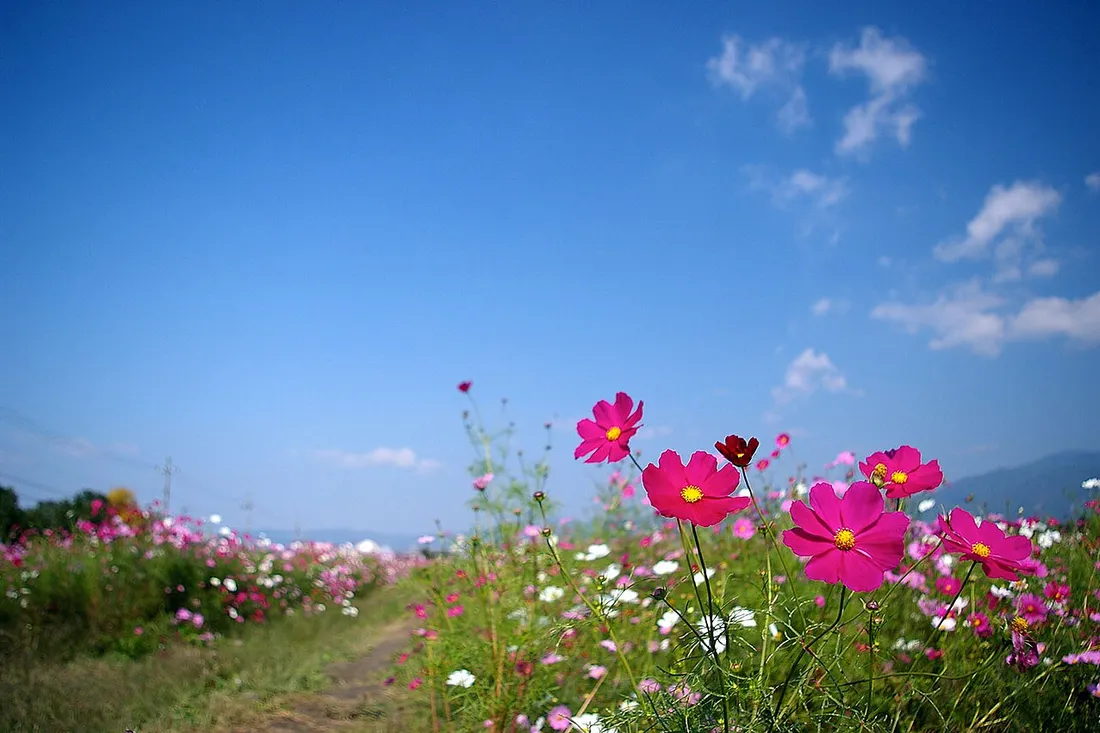
    Pink and magenta cosmos against a blue sky at the Yume Cosmos Garden in Kameoka

    About eight million cosmos of 20 varieties on 4.2 hectares outside Kameoka, 20 minutes from Kyoto by train. It pairs with the Sagano scenic railway, which ends in Kameoka, and with the Hozu river boats, which start there.

    Dates
    01 OCT – 08 NOV
    Where
    KyotoGoogle Maps
    Survive
    Open only in the season, every day: 1 October – 8 November in 2026.
    Holidays
    Sports Day, Culture Day · long weekend: expect full trains and hotels
    Access
    JR Sagano Line rapid from Kyoto to Kameoka, about 20 min, then a Keihan Kyoto Kotsu bus, about 10 min, to Undo-koen-mae.
    Source
    Official siteCosmos page · checked 2026-09-20
    Photos
    Photo credit
    1. Kumamushi · CC BY-SA 3.0

    1–2 h · Open in Google Maps

    About eight million cosmos of 20 varieties on 4.2 hectares outside Kameoka, 20 minutes from Kyoto by train. It pairs with the Sagano scenic railway, which ends in Kameoka, and with the Hozu river boats, which start there. Pink and magenta cosmos against a blue sky at the Yume Cosmos Garden in Kameoka

    Photo · Kumamushi · CC BY-SA 3.0

    北野天満宮

    01 FEB – 25 MAR · Nature · Plum blossom

    Plum blossom — Kitano Tenmangu 北野天満宮

    Kyoto

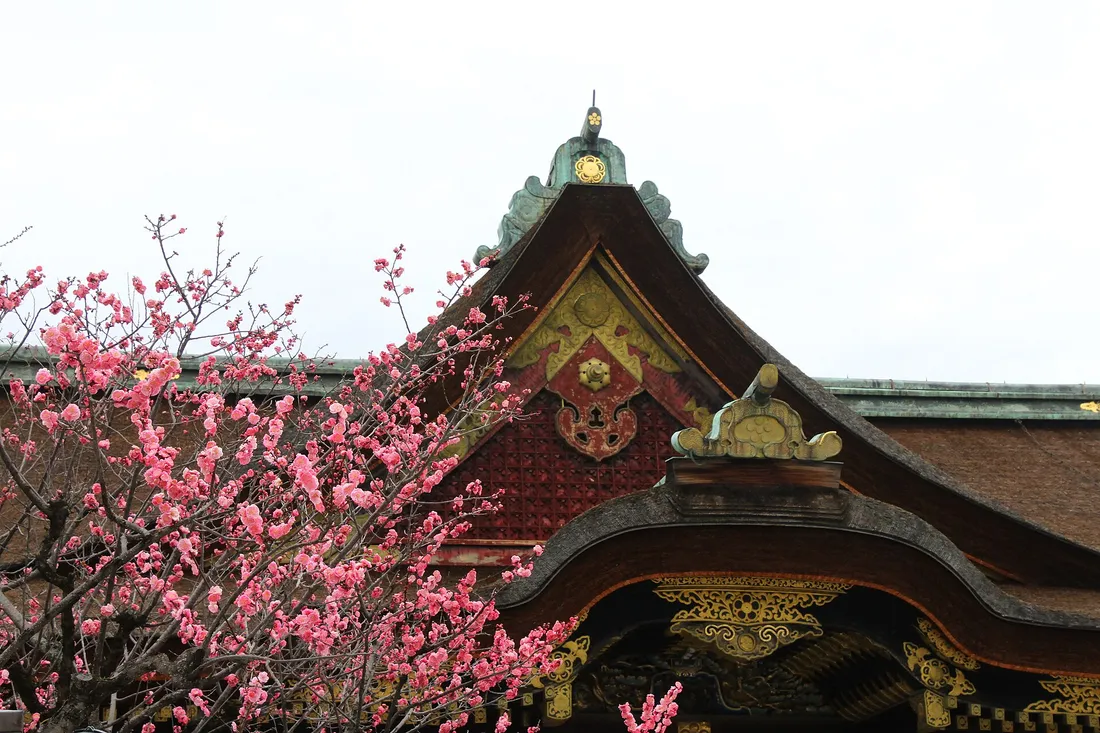
    Pink plum blossom against the gabled roof of the main hall of Kitano Tenmangu
    Deep pink plum blossom in front of a lantern-hung hall at Kitano Tenmangu
    Maples in autumn colour above the Kamiya river in the maple garden of Kitano Tenmangu
    Red maple covering a slope in the maple garden of Kitano Tenmangu

    The head shrine of Tenjin, the deified scholar Sugawara no Michizane, whose flower is the plum: about 1,500 trees of 50 varieties flower here from January to late March. On 25 February, the day of his death, geiko and maiko of the neighbouring Kamishichiken district serve tea in the open air at the Baikasai. In autumn the shrine opens its maple garden on the Odoi, the earth rampart Hideyoshi raised round the city in 1591: about 350 maples above the Kamiya river.

    Dates
    01 FEB – 25 MAR
    Where
    KyotoGoogle Maps
    Survive
    On the 25th of every month the Tenjin-san flea market fills the approaches: come for it or avoid it. In 2026 the plum garden cost ¥3,000 and was lit every evening; the maple garden is ¥1,500 with tea and a sweet.
    Holidays
    National Foundation Day, Emperor's Birthday, Vernal Equinox Day, Substitute holiday · long weekend: expect full trains and hotels
    Access
    City bus to Kitano Tenmangu-mae, about 30 min from Kyoto Stn; or the Randen tram to Kitano-Hakubaicho, then 5 min on foot.
    Heritage
    National Treasure · main halls 北野天満宮 本殿・石の間・拝殿・楽の間 国宝Historic Site · the Odoi earthwork of the maple garden, 1930 御土居 史跡
    Source
    Official site · checked 2026-09-20
    Photos
    4 photos · credits
    1. Hyppolyte de Saint-Rambert · CC BY-SA 4.0
    2. Tmv · CC BY-SA 4.0
    3. くろふね · CC BY-SA 4.0
    4. pcs34560 · Public domain

    10 NOV – 06 DEC · Nature · Autumn foliage

    Autumn foliage — Kitano Tenmangu 北野天満宮

    Kyoto

    Maples in autumn colour above the Kamiya river in the maple garden of Kitano Tenmangu
    Red maple covering a slope in the maple garden of Kitano Tenmangu
    Pink plum blossom against the gabled roof of the main hall of Kitano Tenmangu
    Deep pink plum blossom in front of a lantern-hung hall at Kitano Tenmangu

    The head shrine of Tenjin, the deified scholar Sugawara no Michizane, whose flower is the plum: about 1,500 trees of 50 varieties flower here from January to late March. On 25 February, the day of his death, geiko and maiko of the neighbouring Kamishichiken district serve tea in the open air at the Baikasai. In autumn the shrine opens its maple garden on the Odoi, the earth rampart Hideyoshi raised round the city in 1591: about 350 maples above the Kamiya river.

    Dates
    10 NOV – 06 DEC
    Where
    KyotoGoogle Maps
    Survive
    On the 25th of every month the Tenjin-san flea market fills the approaches: come for it or avoid it. In 2026 the plum garden cost ¥3,000 and was lit every evening; the maple garden is ¥1,500 with tea and a sweet.
    Holidays
    Labour Thanksgiving Day · long weekend: expect full trains and hotels
    Access
    City bus to Kitano Tenmangu-mae, about 30 min from Kyoto Stn; or the Randen tram to Kitano-Hakubaicho, then 5 min on foot.
    Heritage
    National Treasure · main halls 北野天満宮 本殿・石の間・拝殿・楽の間 国宝Historic Site · the Odoi earthwork of the maple garden, 1930 御土居 史跡
    Source
    Official siteAutumn foliage page · checked 2026-09-20
    Photos
    4 photos · credits
    1. くろふね · CC BY-SA 4.0
    2. pcs34560 · Public domain
    3. Hyppolyte de Saint-Rambert · CC BY-SA 4.0
    4. Tmv · CC BY-SA 4.0

    1–2 h · Open in Google Maps

    The head shrine of Tenjin, the deified scholar Sugawara no Michizane, whose flower is the plum: about 1,500 trees of 50 varieties flower here from January to late March. On 25 February, the day of his death, geiko and maiko of the neighbouring Kamishichiken district serve tea in the open air at the Baikasai. In autumn the shrine opens its maple garden on the Odoi, the earth rampart Hideyoshi raised round the city in 1591: about 350 maples above the Kamiya river.

    National Treasure · main hallsHistoric Site · the Odoi earthwork of the maple garden, 1930

    Pink plum blossom against the gabled roof of the main hall of Kitano Tenmangu

    Photo · Hyppolyte de Saint-Rambert · CC BY-SA 4.0

    三室戸寺

    01 JUN – 05 JUL · Nature · Hydrangea

    Hydrangea — Mimuroto-ji 三室戸寺

    Kyoto

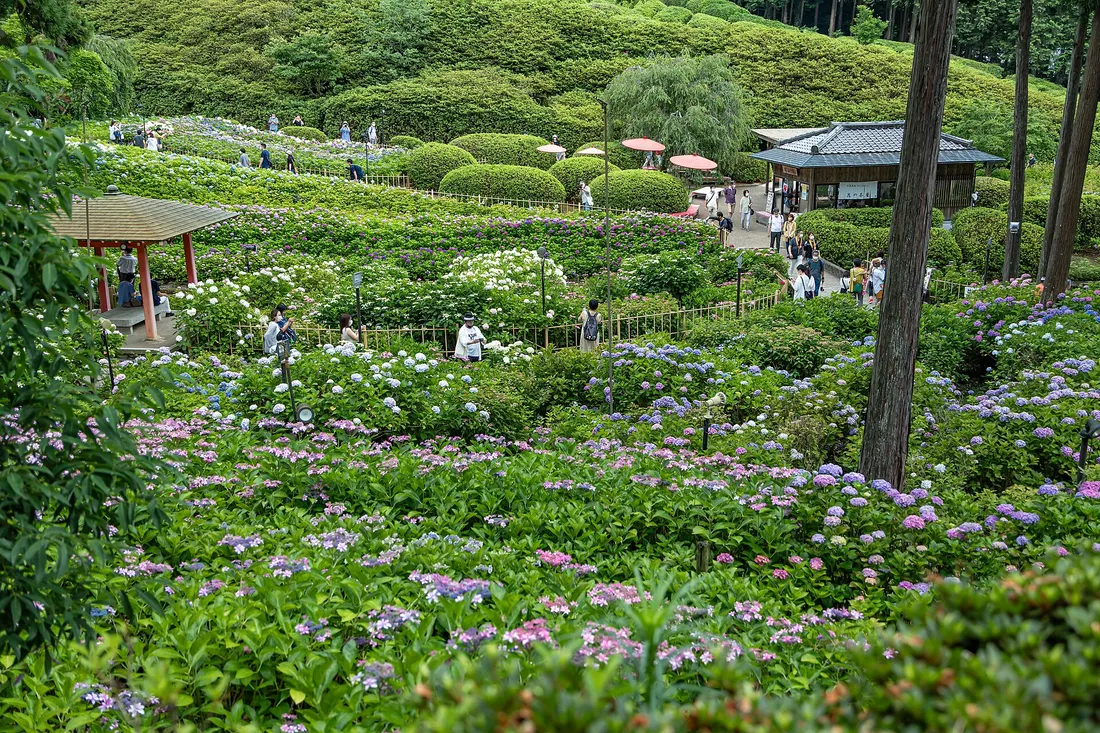
    The hydrangea garden of Mimuroto-ji: flowering bushes under cedars on the slope below the temple
    Pink hydrangeas in front of a vermilion gate at Mimuroto-ji

    A hillside temple in Uji, the tenth stop of the Saigoku pilgrimage, with about 20,000 hydrangeas of 50 varieties planted under cedars below the main hall. The garden opens for five weeks from the end of May, and on some June weekends it reopens after dark.

    Dates
    01 JUN – 05 JUL
    Where
    KyotoGoogle Maps
    Survive
    Heavy. In 2026 the garden was open 31 May – 5 July. The evening opening, Saturdays and Sundays 13–28 June, 19:00–21:00, is a separate ¥1,000 ticket for the garden only, and the day visitors are cleared first.
    Access
    Mimurodo Stn on the Keihan Uji Line, 15 min on foot.
    Source
    Official site · checked 2026-09-20
    Photos
    2 photos · credits
    1. Naokijp · CC BY-SA 4.0
    2. Naokijp · CC BY-SA 4.0

    1–2 h · Open in Google Maps

    A hillside temple in Uji, the tenth stop of the Saigoku pilgrimage, with about 20,000 hydrangeas of 50 varieties planted under cedars below the main hall. The garden opens for five weeks from the end of May, and on some June weekends it reopens after dark. The hydrangea garden of Mimuroto-ji: flowering bushes under cedars on the slope below the temple

    Photo · Naokijp · CC BY-SA 4.0

    美山かやぶきの里

    20 JAN – 25 FEB · Nature · Snow

    Snow — Miyama Kayabuki-no-Sato 美山かやぶきの里

    Kyoto

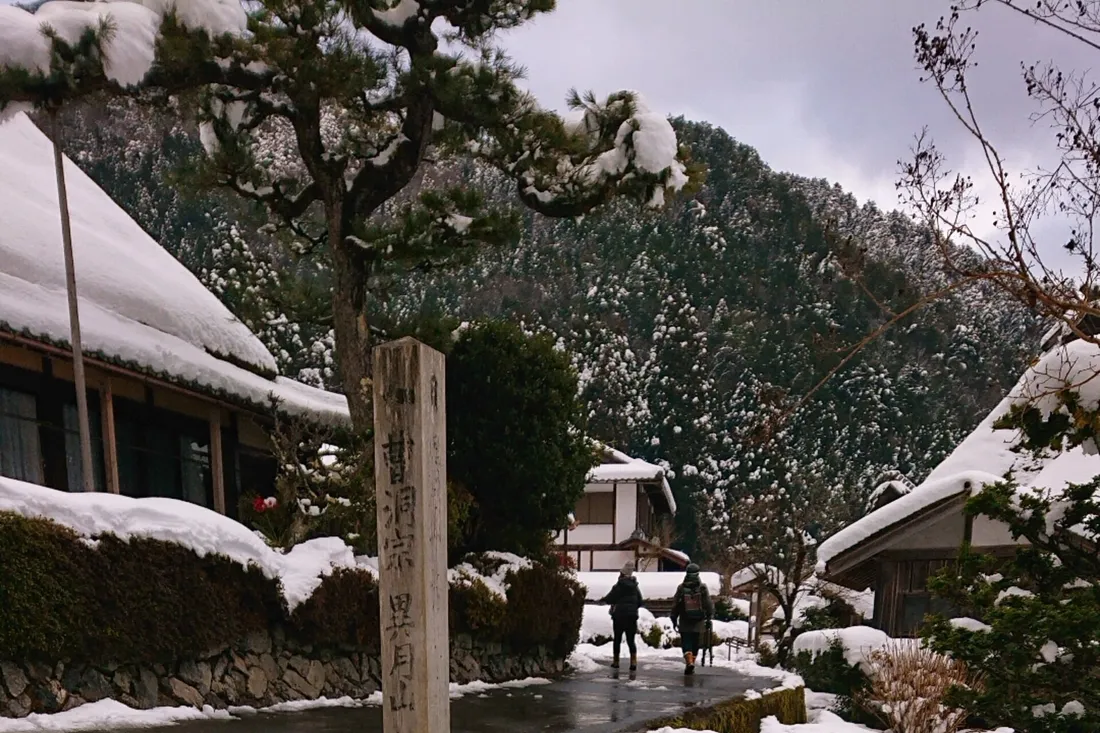
    Snow on the thatched roofs along a lane in Miyama Kayabuki-no-Sato, with wooded hills behind
    A snow-covered thatched roof at the entrance to the hamlet, with the village and hills behind

    A farming hamlet in the mountains north of Kyoto where 39 of the 50 houses keep their thatched roofs, a national preservation district since 1993. Under snow, from late January through February, it is the old countryside intact. For the eight evenings of the winter lantern festival, 30 January – 6 February in 2027, the lanes and houses are lit from 17:00 to 19:00 with about 80 paper lanterns and 200 more.

    Dates
    20 JAN – 25 FEB
    Where
    KyotoGoogle Maps
    Survive
    During the lantern festival every car needs a parking reservation made in advance, on all days. Snow tyres are required on the road in. The winter fireworks of earlier years are not held.
    Holidays
    National Foundation Day, Emperor's Birthday · long weekend: expect full trains and hotels
    Access
    About 80 min by car from Kyoto. By public transport, the JR Sagano Line to Hiyoshi and then the Nantan city bus to Kita; check the last bus back before you go.
    Heritage
    Preservation District for Groups of Traditional Buildings · 1993 南丹市美山町北 重要伝統的建造物群保存地区
    Source
    Official siteSnow page · checked 2026-09-20
    Photos
    2 photos · credits
    1. 経済特区 · CC BY-SA 4.0
    2. 経済特区 · CC BY-SA 4.0

    2 h · Open in Google Maps

    A farming hamlet in the mountains north of Kyoto where 39 of the 50 houses keep their thatched roofs, a national preservation district since 1993. Under snow, from late January through February, it is the old countryside intact. For the eight evenings of the winter lantern festival, 30 January – 6 February in 2027, the lanes and houses are lit from 17:00 to 19:00 with about 80 paper lanterns and 200 more.

    Preservation District for Groups of Traditional Buildings · 1993

    Snow on the thatched roofs along a lane in Miyama Kayabuki-no-Sato, with wooded hills behind

    Photo · 経済特区 · CC BY-SA 4.0

    仁和寺

    08–20 APR · Nature · Cherry blossom

    Cherry blossom — Ninna-ji 仁和寺

    Kyoto

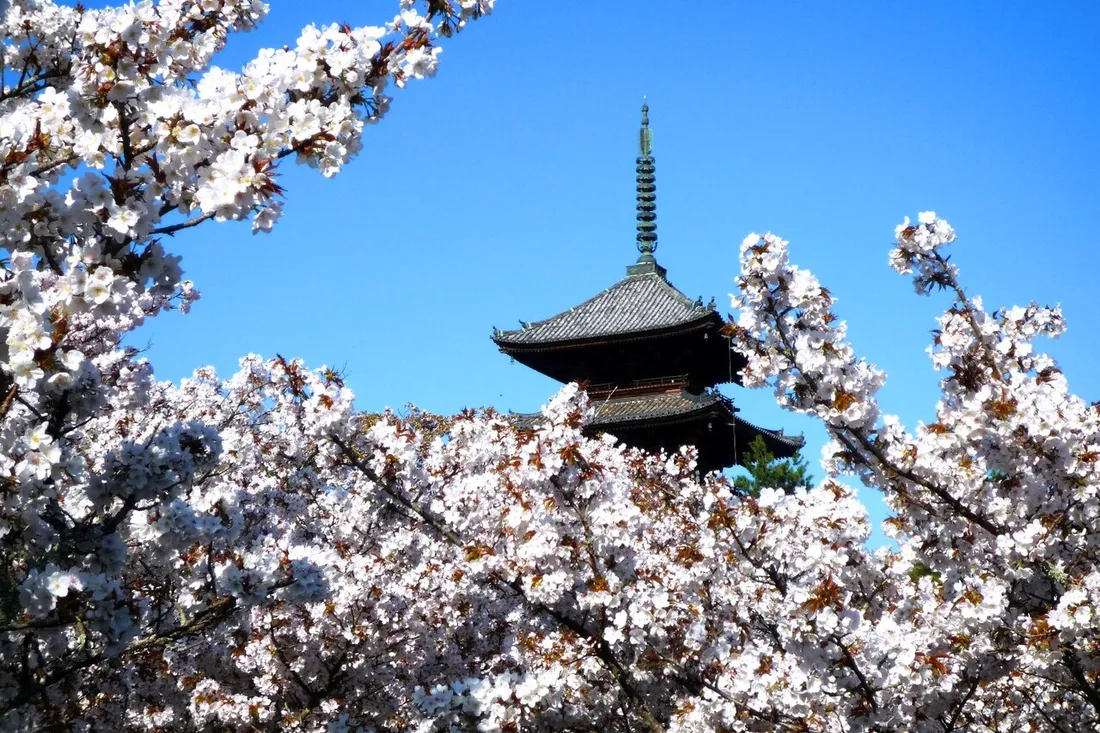
    The five-storey pagoda of Ninna-ji rising above the Omuro cherries in full bloom
    White cherry blossom at Ninna-ji in mid-April, when the late Omuro cherries flower

    The last cherry blossom in the city. The Omuro cherries, about 200 trees, most of a variety called Omuro-ariake, grow only about two metres tall, so the blossom hangs at eye level with the five-storey pagoda behind it. They reach full bloom in mid-April, after the rest of Kyoto has finished.

    Dates
    08–20 APR
    Where
    KyotoGoogle Maps
    Survive
    Heavy. During the Omuro flower festival, 27 March – 6 May in 2026, the grounds charge ¥800; high school students and younger are free. Mid-April weekends queue at the gate from opening.
    Access
    Randen tram to Omuro-Ninnaji, 3 min on foot; or city bus 26 from Kyoto Stn, about 40 min.
    Heritage
    World Heritage · Historic Monuments of Ancient Kyoto, 1994 古都京都の文化財 世界遺産National Treasure · Kondo hall 仁和寺金堂 国宝
    Source
    Official siteCherry blossom page · checked 2026-09-20
    Photos
    2 photos · credits
    1. Bergmann · CC BY 3.0
    2. KimonBerlin · CC BY-SA 2.0

    1–2 h · Open in Google Maps

    The last cherry blossom in the city. The Omuro cherries, about 200 trees, most of a variety called Omuro-ariake, grow only about two metres tall, so the blossom hangs at eye level with the five-storey pagoda behind it. They reach full bloom in mid-April, after the rest of Kyoto has finished.

    World Heritage · Historic Monuments of Ancient Kyoto, 1994National Treasure · Kondo hall

    The five-storey pagoda of Ninna-ji rising above the Omuro cherries in full bloom

    Photo · Bergmann · CC BY 3.0

    All places in Kyoto

    Events

    EventWhat it is

    ずいき祭

    In 7 days · 1–5 Oct

    Matsuri

    1–5 Oct · Matsuri

    Zuiki Matsuri ずいき祭

    Kitano Tenmangu and its otabisho in Nishinokyo, Kyoto

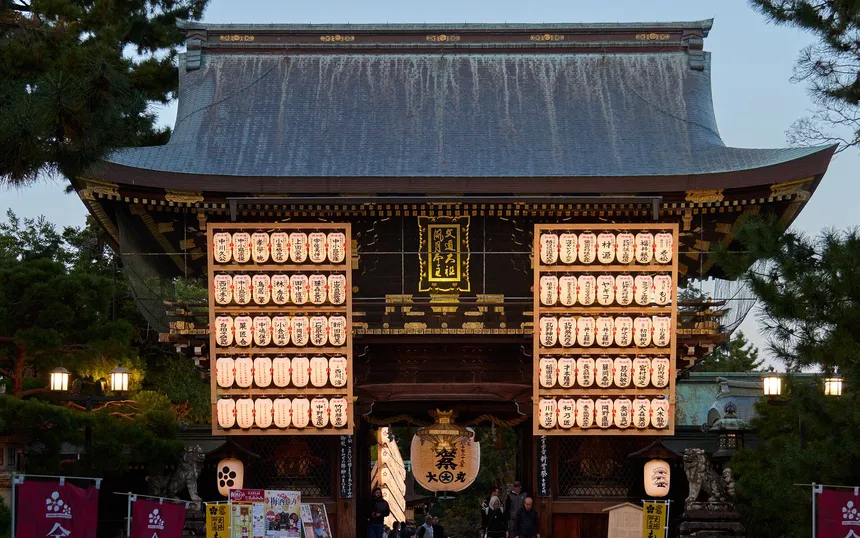
    The Romon gate of Kitano Tenmangu hung with rows of paper lanterns; the shrine is the home of the Zuiki Matsuri

    The autumn thanksgiving of Kitano Tenmangu, on the same five days every year. The farmers of Nishinokyo build a mikoshi whose roof is thatched with zuiki, taro stems, and whose ornaments are all made of vegetables, grains and dried flowers. On the 1st the deity is carried in procession to the otabisho, its resting place in Nishinokyo; on the 4th it returns, and the zuiki mikoshi parades by a route of its own.

    Dates
    1–5 Oct
    Where
    Kitano Tenmangu and its otabisho in Nishinokyo, KyotoGoogle Maps
    Open
    Thu 1 Oct · Shinko-sai: the procession leaves the shrine in the afternoon for the otabishoSun 4 Oct · Kanko-sai: the procession leaves the otabisho at 13:00 and reaches the shrine about 17:00
    Tickets
    Free. The zuiki mikoshi stands on view at the otabisho from the 1st to the 4th and is taken apart on the 5th.
    Source
    Official site · checked 2026-09-20
    Photos
    Photo credit
    1. lumoplank · CC0
    A portable shrine roofed with taro stems and hung with vegetables The Romon gate of Kitano Tenmangu hung with rows of paper lanterns; the shrine is the home of the Zuiki Matsuri

    Photo · lumoplank · CC0

    時代祭

    In 28 days · 22 Oct

    Matsuri

    22 Oct · Matsuri

    Jidai Matsuri 時代祭

    Kyoto Imperial Palace to Heian Shrine, Kyoto

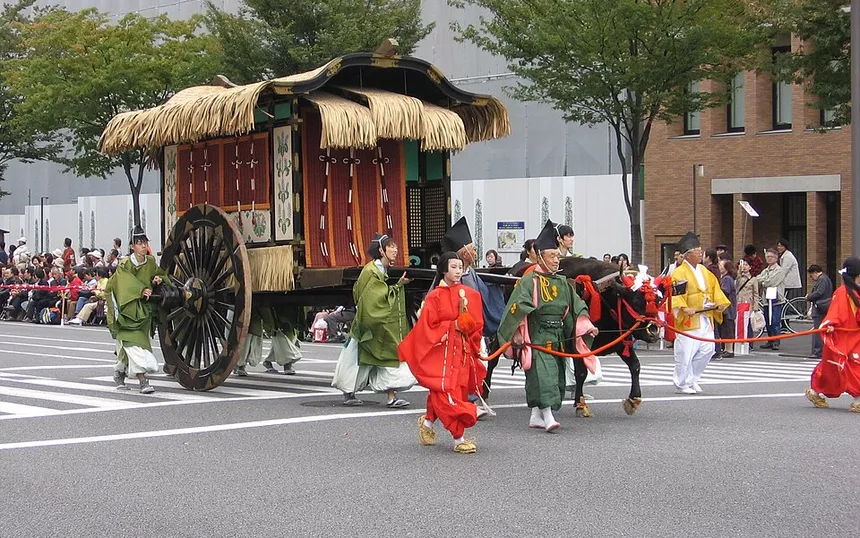
    An ox carriage and courtiers in the Jidai Matsuri procession
    Meiji-era foot soldiers open the Jidai Matsuri procession
    A mounted warrior in the Jidai Matsuri procession
    Women of the Kyoto procession with their banner

    A two-kilometre procession of two thousand people in costume, walking backwards through a thousand years of Kyoto: Meiji soldiers first, Heian courtiers last. The costumes are researched to the dye recipe. It leaves the palace at noon and reaches Heian Shrine mid-afternoon.

    Dates
    22 Oct
    Where
    Kyoto Imperial Palace to Heian Shrine, KyotoGoogle Maps
    Open
    Procession leaves Kyoto Gyoen at 12:00; about two hours to pass any point
    Tickets
    Paid seats at the palace, on Oike-dori and Jingu-michi, ¥5,000–7,500, sold through Kyoto City Tourism Association; free anywhere along the route. On sale since 8 SepBuy tickets
    Source
    Official site · checked 2026-09-12
    Photos
    4 photos · credits
    1. Peter 111 · Public domain
    2. Corpse Reviver · CC BY-SA 3.0
    3. Corpse Reviver · CC BY-SA 3.0
    4. Corpse Reviver · CC BY-SA 3.0
    Two thousand people in costume walk a thousand years of Kyoto history An ox carriage and courtiers in the Jidai Matsuri procession

    Photo · Peter 111 · Public domain

    鞍馬の火祭

    In 28 days · 22 Oct

    Matsuri

    22 Oct · Matsuri

    Kurama Fire Festival 鞍馬の火祭

    Yuki Shrine, Kurama, Kyoto

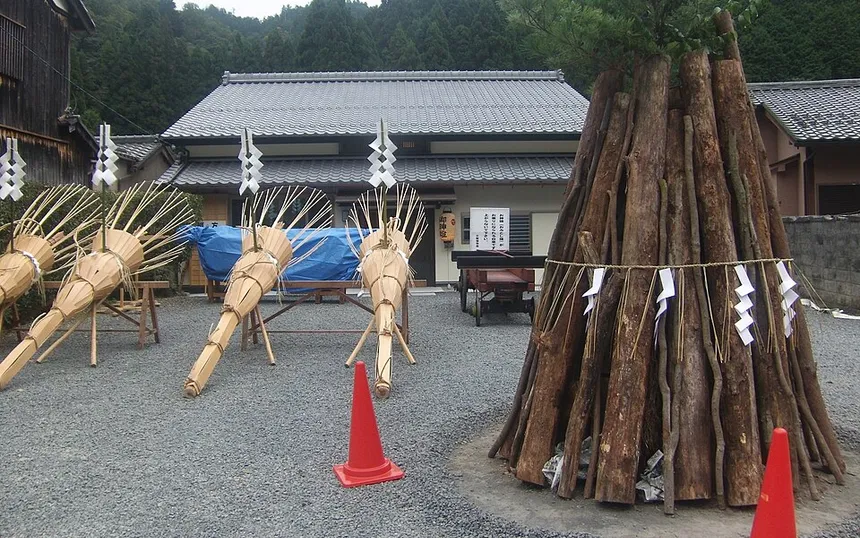
    Giant pine torches stacked in Kurama before the fire festival
    A pine torch resting at a house door in Kurama
    Torches laid out by a stream in Kurama

    The same evening as Jidai Matsuri, an hour up the Eizan line: villagers carry pine torches up to five metres long through a single mountain street until the shrine steps are a wall of fire. It starts at 18:00 and peaks around 21:00; trains back run past midnight.

    Dates
    22 Oct
    Where
    Yuki Shrine, Kurama, KyotoGoogle Maps
    Open
    From 18:00 into the night
    Tickets
    Free, but the small station is capacity-controlled — arrive before 17:00 or expect to queue.
    Source
    Official site · checked 2026-09-08
    Photos
    3 photos · credits
    1. Indiana jo · CC BY-SA 4.0
    2. Indiana jo · CC BY-SA 4.0
    3. Indiana jo · CC BY-SA 4.0
    Villagers carry five-metre pine torches through a single mountain street Giant pine torches stacked in Kurama before the fire festival

    Photo · Indiana jo · CC BY-SA 4.0

    京都非公開文化財特別公開

    In 36 days · 30 Oct – 6 Dec

    Exhibition

    30 Oct – 6 Dec · Exhibition

    Special Opening of Non-Public Cultural Properties 京都非公開文化財特別公開

    32 temples and shrines across Kyoto Prefecture, Kyoto

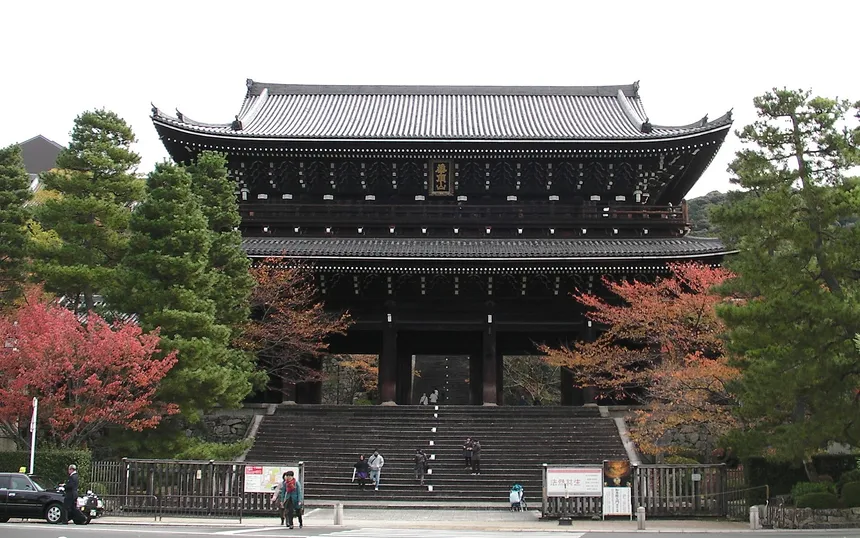
    The Sanmon gate of Chion-in, one of the sites of the special opening, with autumn colour beside the steps
    The five-storey pagoda of To-ji above red maples

    Each autumn since 1965 a preservation foundation opens buildings and treasures that are otherwise not shown. The 62nd edition has 32 sites across the prefecture, among them the lecture hall and five-storey pagoda of To-ji, the Sanmon gate of Chion-in, Kamigamo and Shimogamo shrines, and the Kitayama Kaikan of the Omotesenke tea school, open for the first time. Dates differ from site to site within the period.

    Dates
    30 Oct – 6 Dec
    Where
    32 temples and shrines across Kyoto Prefecture, KyotoGoogle Maps
    Open
    Open every day · Reception 9:00–16:00 at most sites
    Tickets
    ¥1,000 per site, ¥500 for junior high and high school students; a few sites differ. No reservation: pay at each gate.
    Holidays
    Culture Day, Labour Thanksgiving Day · long weekend: expect full trains and hotels
    Source
    Official site · checked 2026-09-22
    Photos
    2 photos · credits
    1. ONO Masanobu · CC0
    2. Andrevan · CC BY-SA 4.0
    Thirty-two halls, gates and treasures that are normally closed The Sanmon gate of Chion-in, one of the sites of the special opening, with autumn colour beside the steps

    Photo · ONO Masanobu · CC0

    祇園をどり

    In 38 days · 1–10 Nov

    Show

    1–10 Nov · Show

    Gion Odori 祇園をどり

    Gion Kaikan, Kyoto

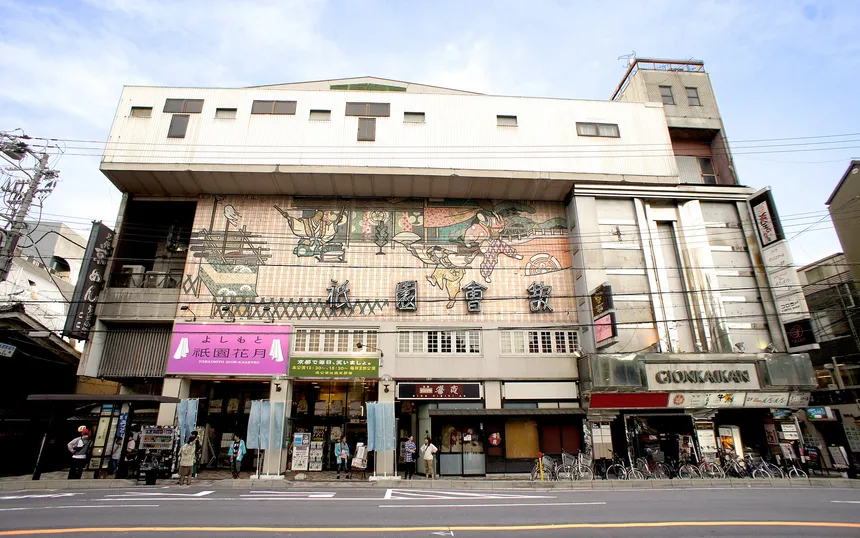
    Gion Kaikan, the hall near Yasaka Shrine where the Gion Higashi district stages Gion Odori

    Four of Kyoto’s five geisha districts stage their public dances in spring; Gion Higashi alone dances in autumn, on the same ten days every year. About an hour of dance by its geiko and maiko, twice a day, with a tea-ceremony seat beforehand for those who take the dearer ticket.

    Dates
    1–10 Nov
    Where
    Gion Kaikan, KyotoGoogle Maps
    Open
    Open every day · Performances at 13:30 and 16:00, about one hour; doors open an hour before
    Tickets
    ¥7,000 with the tea-ceremony seat, ¥6,000 without; sold through the district’s own online shop. Buy tickets
    Holidays
    Culture Day · long weekend: expect full trains and hotels
    Source
    Official site · checked 2026-09-20
    Photos
    Photo credit
    1. Kirakirameister · CC BY-SA 3.0
    The only autumn dance season of Kyoto’s geiko and maiko Gion Kaikan, the hall near Yasaka Shrine where the Gion Higashi district stages Gion Odori

    Photo · Kirakirameister · CC BY-SA 3.0

    吉例顔見世興行

    In 68 days · 1–24 Dec

    Show

    1–24 Dec · Show

    Kaomise kabuki at Minamiza 吉例顔見世興行

    Minamiza, Shijo, Kyoto

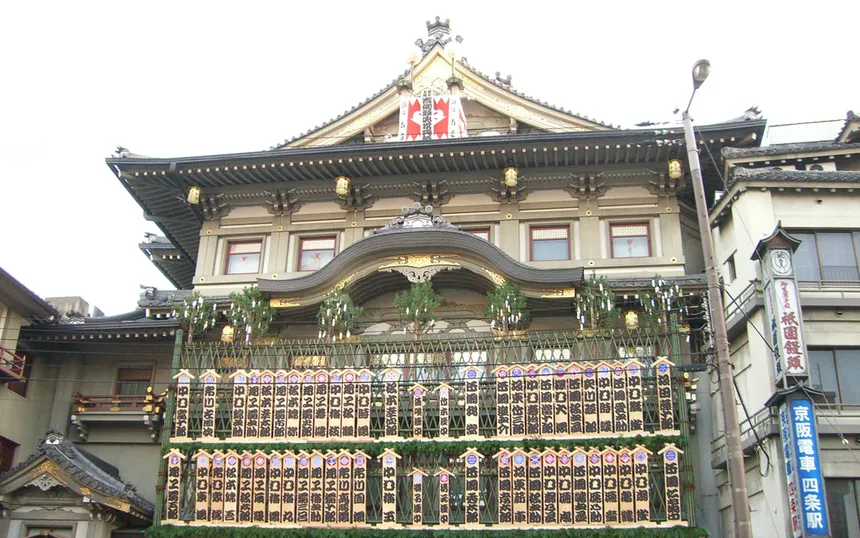
    The facade of Minamiza covered with maneki, the wooden name boards of the kaomise actors, in late November
    The facade of Minamiza theatre on Shijo street

    Kaomise, face-showing, is the December run in which the leading actors of Tokyo and Osaka kabuki share one bill at Minamiza, the theatre beside the Kamo river on the ground where kabuki began. From late November the facade carries the maneki, wooden boards with each actor’s name brushed in thick black script, which Kyoto reads as the start of winter.

    Dates
    1–24 Dec
    Where
    Minamiza, Shijo, KyotoGoogle Maps
    Tickets
    Seat prices, closed days and the general sale date are posted by Shochiku; its members’ pre-sale comes first.
    Heritage
    UNESCO Intangible Cultural Heritage · kabuki, 2008 歌舞伎(ユネスコ無形文化遺産代表一覧表)
    Source
    Official site · checked 2026-09-20
    Photos
    2 photos · credits
    1. Conveyor belt sushi · CC BY 2.0
    2. Asturio Cantabrio · CC BY-SA 4.0
    The December run in which kabuki’s leading actors of east and west appear together The facade of Minamiza covered with maneki, the wooden name boards of the kaomise actors, in late November

    Photo · Conveyor belt sushi · CC BY 2.0

    KYOTOGRAPHIE 京都国際写真祭 2027

    In 205 days · 17 Apr – 16 May

    Art

    17 Apr – 16 May · Art

    KYOTOGRAPHIE 2027 KYOTOGRAPHIE 京都国際写真祭 2027

    Temples, machiya and galleries across Kyoto, Kyoto

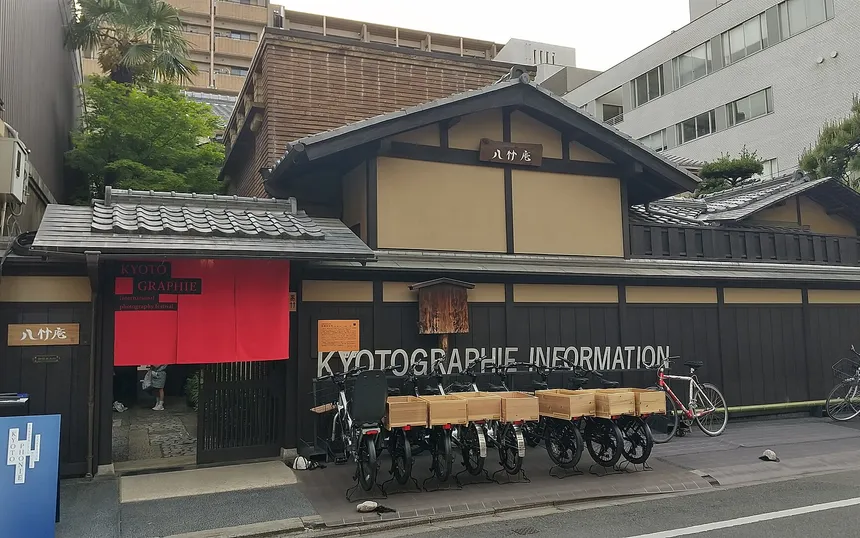
    The KYOTOGRAPHIE information centre in a traditional Kyoto townhouse during the 2023 festival
    A KYOTOGRAPHIE venue in a Kyoto townhouse, with the exhibition board at its gate, 2025

    An international photography festival, held every spring since 2013, that hangs its exhibitions in places you would otherwise not enter: temple halls, machiya townhouses, old industrial buildings. A month of main exhibitions, with a fringe programme, KG+, of smaller shows around them.

    Dates
    17 Apr – 16 May
    Where
    Temples, machiya and galleries across Kyoto, KyotoGoogle Maps
    Tickets
    The programme, the venues and the passport price for 2027 are not announced yet.
    Holidays
    Showa Day, Constitution Memorial Day, Greenery Day, Children's Day · long weekend: expect full trains and hotels
    Source
    Official site · checked 2026-09-20
    Photos
    2 photos · credits
    1. Toyotsu · CC BY-SA 4.0
    2. Toyotsu · CC BY-SA 4.0
    An international photography festival hung in temples and townhouses The KYOTOGRAPHIE information centre in a traditional Kyoto townhouse during the 2023 festival

    Photo · Toyotsu · CC BY-SA 4.0

    祇園祭

    In 293 days · 14–24 Jul

    Matsuri

    14–24 Jul · Matsuri

    Gion Matsuri 祇園祭

    Yasaka Shrine and the float districts of central Kyoto, Kyoto

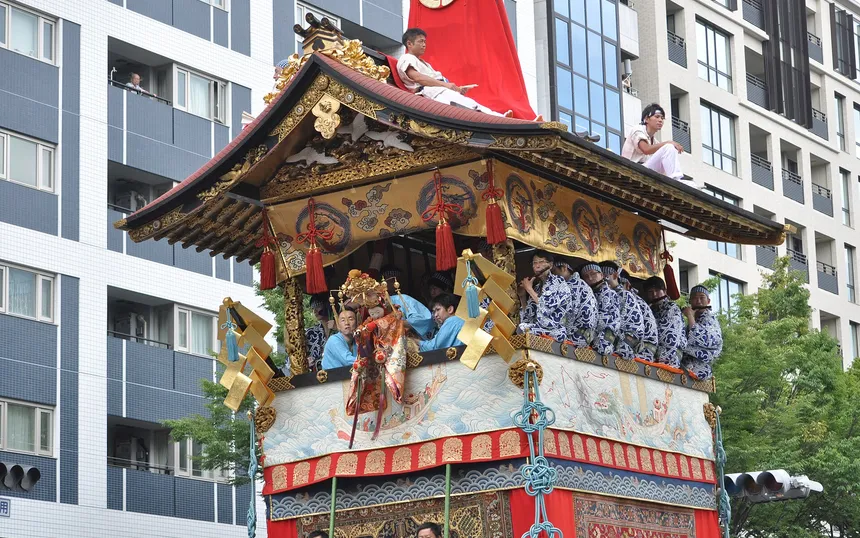
    The Hoka-boko float passing between city buildings in the procession of 17 July, with men riding its roof
    Floats and their pulling teams on Oike street during the procession of 17 July
    The lanterns of the Minami Kannon-yama float lit on a festival eve

    Kyoto’s festival of July, begun in 869 as a rite against plague. Thirty-four floats, the tallest about 25 metres and hung with tapestries from as far as Persia and Flanders, are pulled through the centre in two processions: the Saki Matsuri on the 17th and the smaller, quieter Ato Matsuri on the 24th. On the three evenings before each, the floats stand lit in their home streets. In 2027 both processions fall on Saturdays, and the 24th leaves time to reach the boats of Osaka’s Tenjin Matsuri the next evening.

    Dates
    14–24 Jul
    Where
    Yasaka Shrine and the float districts of central Kyoto, KyotoGoogle Maps
    Open
    Wed 14 Jul · Yoiyama evenings of the Saki Matsuri, 14–16 July: floats lit in their streetsSat 17 Jul · Saki Matsuri procession from 9:00, 23 floatsWed 21 Jul · Yoiyama evenings of the Ato Matsuri, 21–23 JulySat 24 Jul · Ato Matsuri procession from 9:30, 11 floats
    Tickets
    Free from the pavement; paid seats usually go on sale in June. Rooms for 14–17 July sell out months ahead.
    Holidays
    Marine Day · long weekend: expect full trains and hotels
    Heritage
    UNESCO Intangible Cultural Heritage · 2009 京都祇園祭の山鉾行事(ユネスコ無形文化遺産代表一覧表)Important Intangible Folk Cultural Property · 1979 京都祇園祭の山鉾行事
    Source
    Official site · checked 2026-09-20
    Photos
    3 photos · credits
    1. Edomura no Tokuzo · CC BY-SA 4.0
    2. Edomura no Tokuzo · CC BY-SA 4.0
    3. Sakurai Midori · CC BY-SA 3.0
    Two processions of towering floats, both on Saturdays in 2027 The Hoka-boko float passing between city buildings in the procession of 17 July, with men riding its roof

    Photo · Edomura no Tokuzo · CC BY-SA 4.0

    All events in Kyoto

    Meibutsu & craft

    • Meibutsu & craft · Kyoto

      Nishijin weaving 西陣織

      にしじんおり

      Figured silk woven from threads dyed before weaving, often with gold and silver: the brocade of kimono sashes, priests’ robes and Noh costumes. The district is named after the Western Army camp of the Onin War, where the weavers resettled.

    • Meibutsu & craft · Kyoto

      Kyo-yuzen dyeing 京友禅

      きょうゆうぜん

      Kimono silk painted by hand with pictures, flowers and landscapes, using a line of rice paste that keeps each colour inside its outline. The method is named after a fan painter of the late 17th century; the cloth used to be rinsed in the Kamo River.

    • Meibutsu & craft · Kyoto

      Kyoto and Kiyomizu ware 京焼・清水焼

      きょうやき・きよみずやき

      Pottery and porcelain from the slopes below Kiyomizu-dera: tea bowls, cups and plates, often finely painted in overglaze enamel colours and gold. Kyoto potters have made it since the 17th century, to the taste of the court and the tea masters.

    • Meibutsu & craft · Kyoto

      Kyoto folding fans 京扇子

      きょうせんす

      Folding fans of bamboo ribs and paper or silk, made for dance, the tea ceremony and gifts as much as for cooling. The folding fan is a Kyoto invention of the early Heian court, and a fan is still said to pass through craftsmen’s hands 87 times.

    • Meibutsu & craft · Kyoto

      Tango crepe 丹後ちりめん

      たんごちりめん

      Silk crepe with a fine, crinkled surface that takes colour deeply and softly: the base cloth for most dyed kimono. It has been woven on the Sea of Japan side of the prefecture since the 1720s.

    Food

    • Food · Kyoto

      Uji tea 宇治茶

      うじちゃ

      Green tea from Uji and the hills around it, above all matcha, the powdered tea of the tea ceremony, and gyokuro, both from leaves shaded before picking. In Uji it also goes into soft-serve ice cream, noodles and sweets.

    • Food · Kyoto

      Pike conger

      はも

      A long white fish full of fine bones, which the cook scores every millimetre or so so that they can be eaten; blanched for a moment, it opens like a flower and is eaten with sour plum. It is the fish of July and the Gion Matsuri.

    • Food · Kyoto

      Mackerel sushi 鯖寿司

      さばずし

      Salted, vinegared mackerel pressed onto a thick bar of rice, often under a sheet of kelp, and cut into slices. In Kyoto it is the food of festival days.

    • Food · Kyoto

      Senmaizuke 千枚漬け

      せんまいづけ

      Paper-thin slices of large white Shogoin turnip pickled with kelp, mild, sweet and a little sticky; made from November to February. The name means a thousand slices.

    • Food · Kyoto

      Yudofu 湯豆腐

      ゆどうふ

      Blocks of soft tofu warmed in kelp stock at the table and dipped in soy sauce with spring onion and ginger. It is the classic meal near Nanzen-ji and in Arashiyama, best in winter.

    History through time

    794
    Emperor Kanmu moves the court to Heian-kyo, a grid city on the Chinese model; it stays the capital for more than a thousand years.

    1467
    The Onin War begins; ten years of fighting burn most of the city.

    1591
    Toyotomi Hideyoshi rings the rebuilt city with the Odoi, an earthen wall of about 22 kilometres; a stretch survives at Kitano Tenmangu.

    1867
    The last shogun announces the return of power to the emperor at Nijo Castle; two years later the court leaves for Tokyo.

    1890
    The Lake Biwa Canal opens and soon drives Japan's first hydroelectric plant and first electric tramway, the city's answer to losing the court.

    1945
    Kyoto is taken off the list of atomic bomb targets and escapes heavy bombing, which is why the wooden city survives.
    Add to which trip?